

Invisalign at Home: Planning, Supervision and Daily Care

Invisalign aligners are worn daily at home, but safe tooth movement always requires in-person clinical planning and oversight. Unsupervised mail-order trays carry risks, making thorough diagnostics and professional monitoring essential for protecting your teeth, gums, and overall bite alignment.
What Invisalign at Home Really Means
Much of aligner wear happens during everyday life, including at home. The treatment plan and follow-up still involve your treating clinician. Understanding those separate responsibilities helps you judge what a provider means when they advertise convenient home treatment.[2]
Daily Wear vs Do-It-Yourself Straightening
Your role includes wearing the trays as directed, cleaning your teeth and appliance, and reporting problems. Your clinician assesses suitability and decides how the plan should progress. Do not change the sequence or attempt to move teeth yourself when something seems slow.[1][2]
The Mail-Order Confusion
Invisalign is a particular brand of aligners, not a general name for every clear tray sold online. Providers and their arrangements for supervision vary. Check the actual product, who is responsible for your care, and what assessment and follow-up are included.[1][2]
Why an In-Person Examination Matters
The ADA advises seeking a dental assessment before attempting to straighten teeth. How the front teeth look is only part of the picture. Your clinician considers the health of your teeth, gums and bite before recommending a treatment approach.[1][3]
Detecting Hidden Oral Problems
An examination can identify dental issues that need attention before orthodontic treatment. Your clinician may recommend further records or imaging based on their findings. Ask them to explain what was checked and whether any care is needed before you start aligners.[1][3]
The Limits of Remote Photos
Photos can be useful for communication, but they do not provide the same information as a full dental examination and any necessary imaging. Ask your clinician what can be assessed remotely and which concerns need an appointment in person.[1]
How Clinicians Plan Your Alignment
Clear aligners are used in a planned sequence to guide tooth movement. Your clinician explains the intended changes and checks how your teeth respond. The plan should cover your bite and dental health as well as the appearance you hope to achieve.[2][3]
Prescribed Sequences and Wear Schedules
Follow the wear and tray-change schedule you receive. If work, travel or discomfort makes it difficult, tell your clinician so they can advise you. A schedule from another patient or an online example may not be right for your treatment.[2]
Orthodontic Goals Beyond Cosmetic Straightening
Straightening teeth is not just about looks; it aligns your bite and improves long-term function. A clinician assesses whether clear aligners fit your needs or if an alternative appliance would work better.[2][3]
Finding the Right Appliance for Your Bite
Some bite problems or severe rotations respond better to other orthodontic approaches. Professional assessments match the correct device to your mouth rather than forcing one tool onto every alignment challenge.[2][3]
Comparing Clinician Care to Unsupervised Kits
When comparing home-treatment offers, look at the assessment, responsible clinician and access to follow-up. Delivery by post or remote check-ins alone do not tell you the quality of care. The important questions concern how your mouth is assessed and problems are managed.[1][2]
Dangers of Moving Teeth Without Oversight
The ADA warns that moving teeth without understanding the full dental condition can harm teeth, gums and the bite. Avoid trying to adjust teeth or appliances yourself. Discuss any treatment you are considering with a dentist who can assess your oral health.[1]
Key Questions for Any Aligner Provider
Before starting any aligner process, protect your health by asking vital questions about who directs your care, how your mouth is evaluated, and what happens if problems arise.[1][2]
- Who examines my mouth in person before treatment starts?
- What diagnostic methods are used to inspect my gums and bone?
- How will my progress and bite changes be checked regularly?
- What steps are taken if an aligner stops fitting correctly?

Follow-Up Appointments and Progress Checks
Routine check-ins allow your clinician to verify that your teeth move according to schedule. While remote check-ins may sometimes supplement care, they cannot replace initial exams and necessary physical reviews.[1][4]
Addressing Fit Concerns Early
Contact your treating team if a tray no longer seats as expected, feels sharp or causes concerning discomfort. Explain when the change started and which tray you are using. The clinician can decide whether advice, a replacement or an in-person check is needed.[4]
What to Do if an Aligner Is Lost
Contact your treating dentist promptly if an aligner is lost or damaged. Depending on your treatment progress, they may advise moving to the next set of trays. Follow their instructions before changing trays, and keep the contact details somewhere you can find them when you are away from home.[4]
Your Daily Home Care and Storage Routine
A practical home routine includes prescribed wear, tooth cleaning and careful storage. Keep your case and recommended supplies together. Making the routine easy to repeat is useful when your day includes meals out, work or travel.[4]
Aligner Cleaning and Oral Hygiene
Follow the cleaning instructions supplied with your aligners and keep up your tooth and gum care. Remove trays for meals and drinks other than plain water as directed. Ask about a workable routine if you cannot always clean your teeth immediately after eating.[4]
Protective Storage When Not in Use
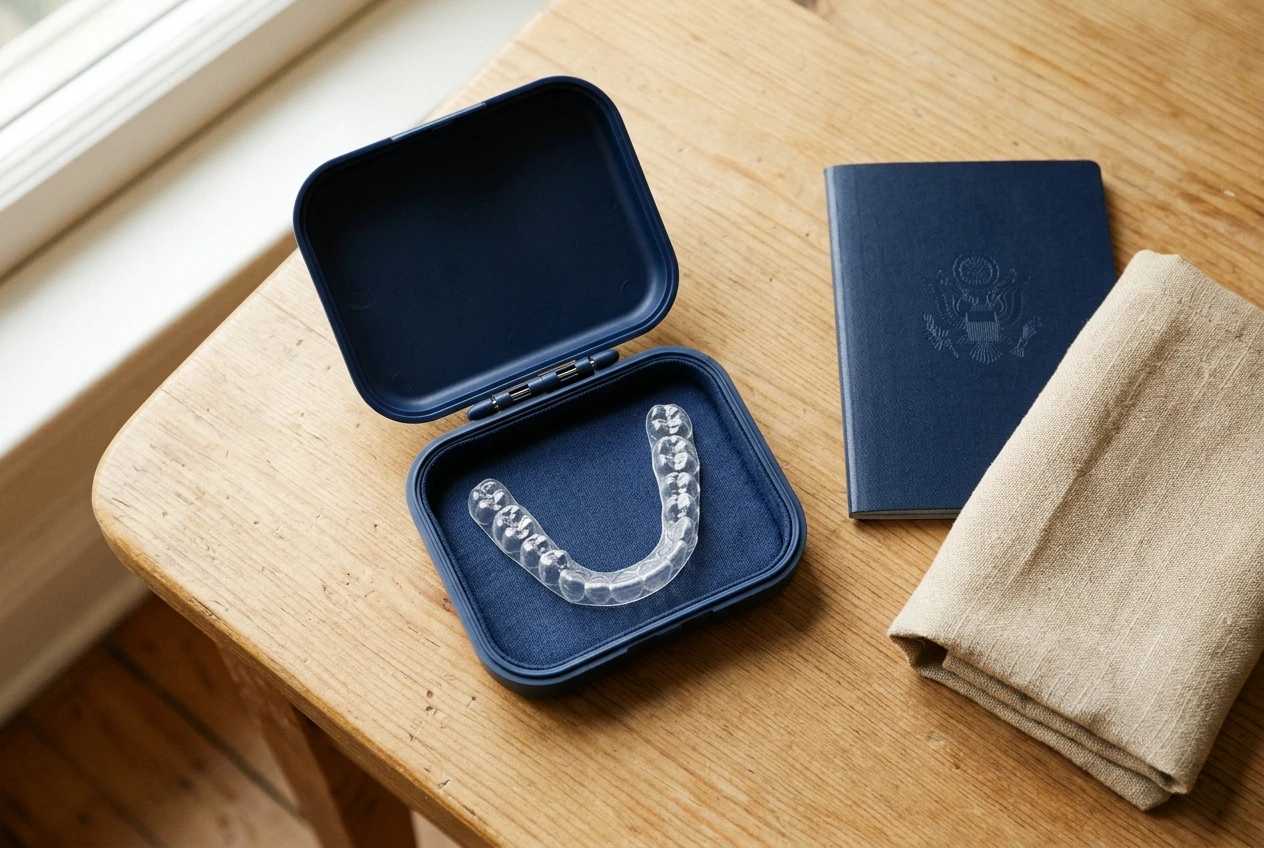
Use the protective case when trays are out of your mouth, and keep it in a consistent place. A tray wrapped in a napkin can be discarded by mistake. Keep appliances out of reach of pets and avoid leaving them exposed to heat.[4]
Maintaining Your Results After Treatment
Once active treatment is complete, your clinician will discuss retention. Teeth can shift afterward, so following a retainer plan helps maintain the result. Ask how retainer wear, cleaning and checkups will fit into your routine.[3]
The Vital Role of Retainers
Your clinician will prescribe retainers once alignment goals are reached. Wearing them as instructed preserves your bite stability and protects the time and effort invested in treatment.[3]
Sources
- Do-it-yourself (DIY) Dentistry — American Dental Association
- Clear Aligners — American Association of Orthodontists
- Orthodontics — American Dental Association
- Living With Braces — American Association of Orthodontists
Common questions
Frequently asked questions
Talk with a dentist about your next step
If you are considering clear aligners to improve your smile, schedule a clinical consultation to discuss whether clear aligner therapy suits your personal dental health goals.
More Articles
View all Dental care
Is It a Dental Emergency? A Quick Check
Use this quick check to review your dental emergency signs, decide whether to seek hospital care, call for same-day emergency care, or book a routine visit, and learn what to do right now.October 22, 2026 · 6 min read Dental care
Why My Gums Bleed When I Brush: 5 Common Causes
Noticeable bleeding during your daily oral hygiene routine often signals gingivitis, accumulated calculus, or advancing gum disease. Recognizing these underlying causes helps you protect your oral health and seek timely professional dental care.October 21, 2026 · 5 min read Cosmetic Dentistry