

Does Green Tea Stain Your Teeth: A Patient Guide to Professional Teeth Whitening
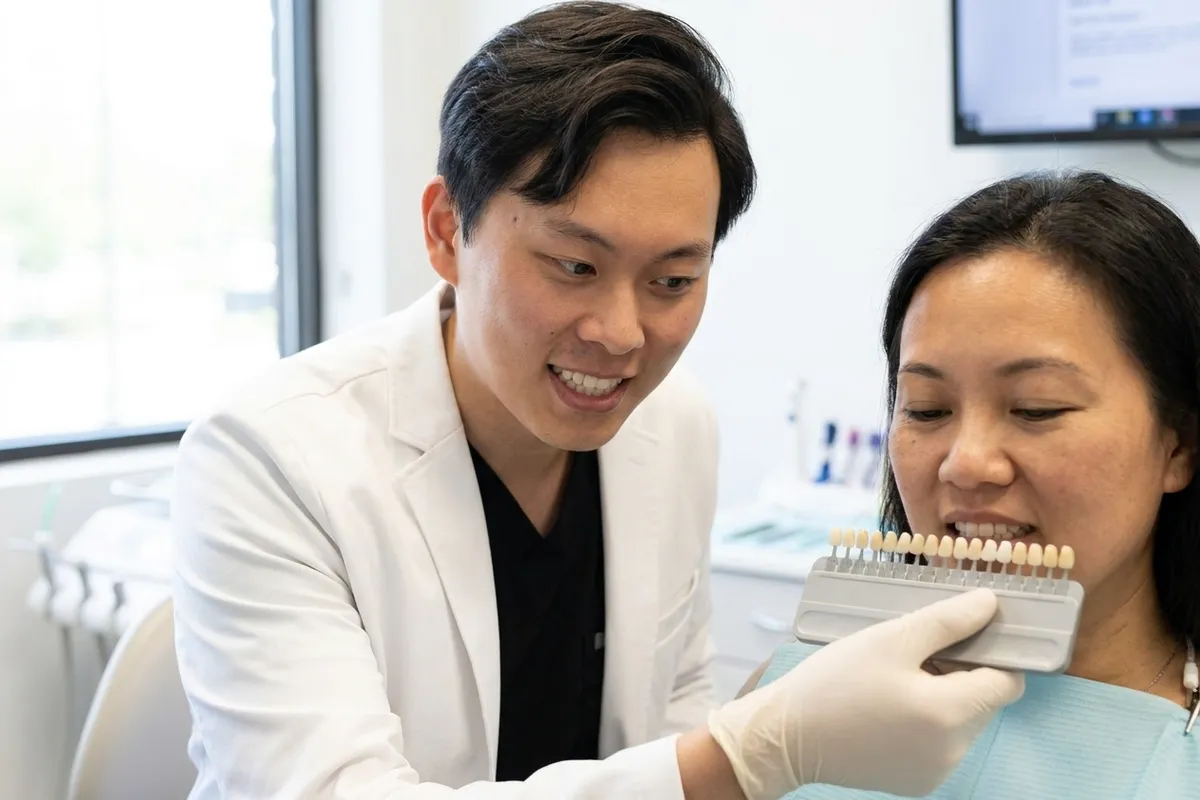
Tea contains pigments that can attach to tooth enamel over time. While a laboratory study shows green tea deposits elements on teeth, this evidence does not establish visible everyday staining. If discoloration occurs, professional teeth whitening may lighten natural teeth.
Understanding Tea Stains and Whitening
Understanding how beverages affect your smile is an important part of dental care. While many people enjoy tea, its pigments can interact with the outer layer of your teeth, sometimes leading to cosmetic concerns that professional teeth whitening can address.[1][2]
Surface Stains and Pigments
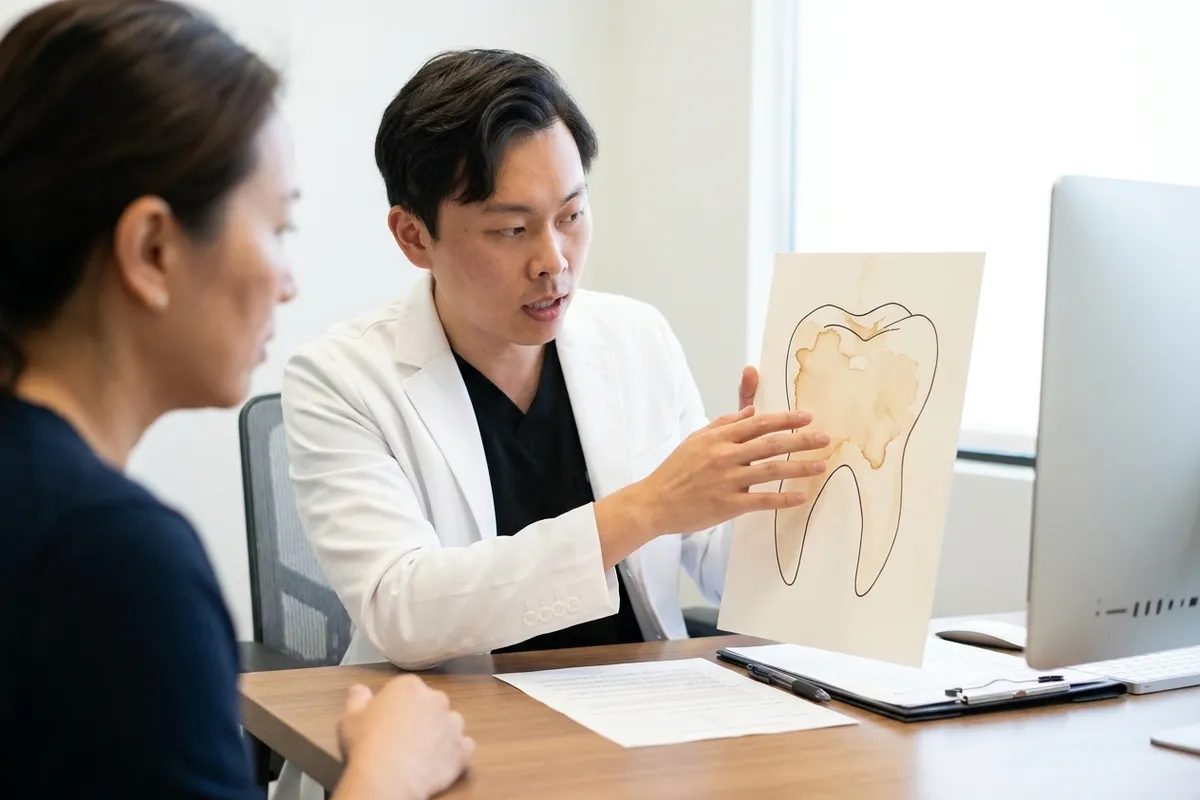
Tea contains pigments called chromogens that can attach to tooth enamel, causing what dentists call extrinsic discoloration. This means the stain sits on the surface of the tooth rather than inside it. Frequent consumption of pigmented drinks can gradually worsen these surface stains over time.[1][2]
Green Tea Laboratory Evidence
A laboratory study on rat teeth shows that green tea can deposit elements onto the enamel structure. However, this laboratory evidence cannot predict an individual's visible staining or identify a safe number of cups, making the exact cosmetic effect of everyday green tea drinking uncertain.[3]
Factors Influencing Tooth Discoloration
Several factors influence whether you might develop visible discoloration and how effectively professional teeth whitening can resolve it. A dentist considers your daily habits, oral hygiene routine, and the specific types of stains present on your enamel.[1][2]
Oral Hygiene and Beverage Habits
Poor oral hygiene combined with frequent consumption of pigmented beverages can make extrinsic stains more noticeable. Drinking water can help wash away bacteria, while brushing twice daily with an ADA-Accepted toothpaste helps remove surface stains through safe abrasive ingredients.[1][4][5]
Additives and Cavity Risks
Sugar added to your tea allows plaque bacteria to produce acids that attack tooth enamel. Brushing twice daily with fluoride toothpaste helps prevent decay.[4][5]
When to Consider Teeth Whitening
You might start noticing a gradual change in your tooth color over time. If you observe visible tooth discoloration, you can discuss professional teeth whitening options with a dentist.[1][2]
Recognizing Extrinsic Discoloration
Extrinsic staining is on the tooth surface. Tooth color can also change due to age, trauma, or certain medications. A dental visit can help evaluate the cause of the color change.[1][2]
Dental Assessment for Whitening
Before starting a bleaching treatment, a dental assessment is recommended. This assessment helps evaluate your suitability for whitening and the cause of the discoloration.[1]
The Consultation Process
During a consultation, the dentist assesses the cause of your tooth discoloration and checks for existing restorations, allergies, or a history of tooth sensitivity. This evaluation is crucial because professional bleaching products are designed to lighten natural teeth, whereas crowns and fillings will not whiten.[1]
Whitening Options and Alternatives
If you want to address tooth discoloration, several approaches are available. Options include whitening toothpaste, professional cleaning, and bleaching. You can discuss these options with a dentist to determine an appropriate approach.[1][2]
Toothpaste and Professional Cleaning
Brushing with an ADA-Accepted whitening toothpaste can reduce minor surface stains through the use of mild abrasives. Additionally, a professional dental prophylaxis, or routine cleaning, can polish away many extrinsic stains caused by pigmented beverages, which may be sufficient without needing a dedicated bleaching treatment.[1][2][5]
Professional Bleaching Methods
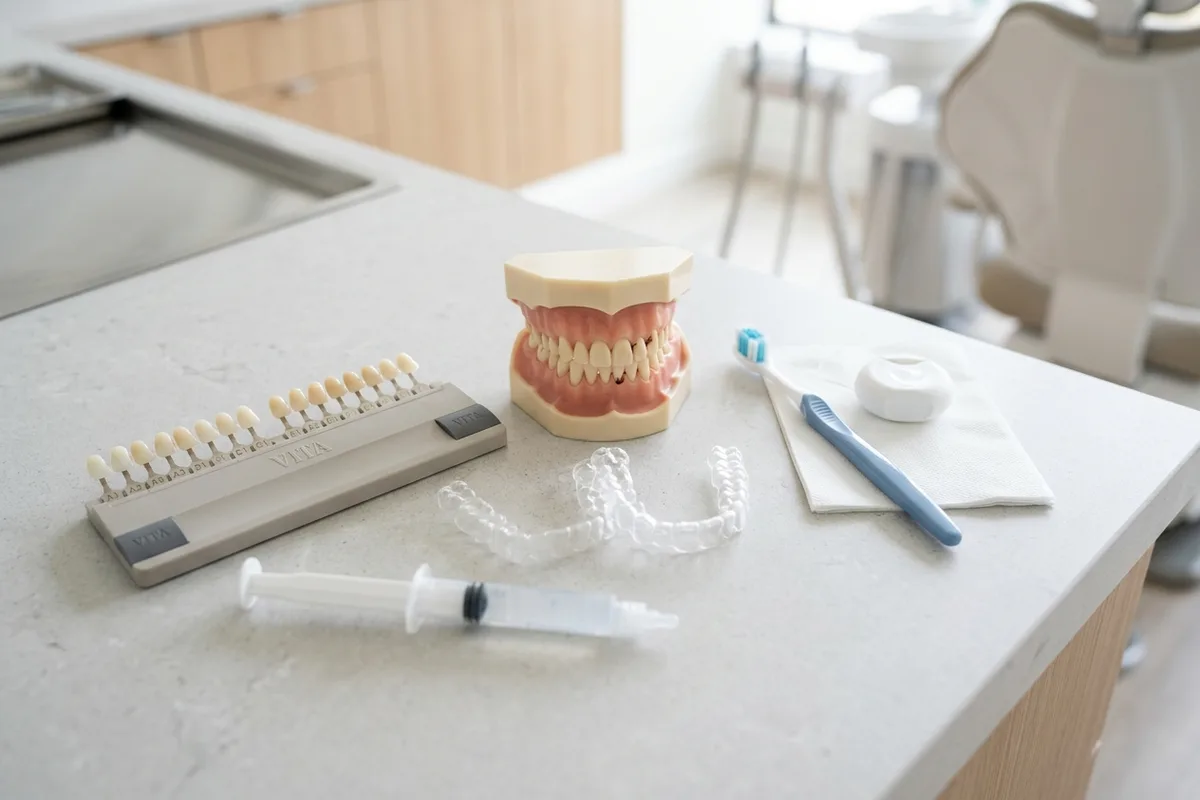
Dentists offer in-office bleaching or dentist-supervised home bleaching kits. In-office treatments include specific protective measures for your gums. Home kits utilize custom trays to reduce the bleaching gel's contact with gum tissue and may take days to weeks to complete.[1][2]
The Teeth Whitening Process
The teeth whitening process varies depending on whether you choose an in-office procedure or a take-home kit. Both methods use peroxide chemistry to lighten the tooth color, but they differ in application techniques and overall treatment timelines.[1][2]
In-Office Whitening Procedures
During an office bleaching appointment, the dental team applies a peroxide gel directly to your natural teeth. They carefully protect your gums to reduce the risk of irritation. Responses vary with the cause of discoloration.[1][2]
Dentist-Supervised Home Bleaching
If you select a home bleaching option, the dentist supplies custom-fitted trays and detailed instructions. You will apply the peroxide gel to the trays and wear them as directed. This gradual process may take several days to weeks to achieve the desired lightening effect.[1][2]
Aftercare and Maintaining Results
Brushing can remove surface stains. However, frequent consumption of pigmented drinks may worsen extrinsic discoloration.[1][2]
Managing Temporary Side Effects
Temporary tooth sensitivity and gingival irritation are common side effects of bleaching. Overuse can damage enamel or gums. Follow product directions to avoid overuse.[1][2]
Daily Maintenance Routine
Brushing twice daily with a fluoride toothpaste and cleaning between your teeth daily support oral health. Drinking water washes away bacteria and dilutes acids.[4][5]
Limitations and Next Steps
It is important to understand the limitations of teeth whitening. Overusing bleaching products can damage your enamel or gums, so professional guidance is recommended.[1][2]
Treatment Limitations and Consultation
The response to whitening depends in part on the underlying cause of the discoloration. Existing dental restorations, such as crowns and fillings, do not whiten like natural teeth. A professional consultation can help determine if bleaching is an option for your smile.[1]
Sources
- Whitening — American Dental Association
- Teeth Whitening — American Dental Association
- Spectroscopic and microscopic examination of teeth exposed to green tea at different temperatures — pmc.ncbi.nlm.nih.gov
- Diet and Dental Health — American Dental Association
- Toothpastes — American Dental Association
Common questions
Frequently asked questions
Talk with One Ounce Dental about your next step
If you are concerned about tooth discoloration or want to explore professional teeth whitening, contact One Ounce Dental today. Schedule an appointment to discuss your cosmetic goals and find the best approach for your smile.
More Articles
View all Preventive & General
Why Are My Teeth Sensitive All Of A Sudden: A Patient Guide to General Dentistry
Experiencing sudden tooth sensitivity can be uncomfortable and alarming. Whether triggered by hot coffee or cold ice cream, understanding why your teeth are sensitive all of a sudden is the first step toward finding relief and protecting your smile.October 9, 2026 · 5 min read Dental care
Dry Socket Symptoms, Causes, and General Dentistry Treatments
Dry socket develops when a blood clot dissolves or dislodges after a tooth extraction, leaving sensitive bone exposed. Understanding its symptoms, risk factors, and dental treatments helps protect normal oral healing.October 8, 2026 · 6 min read Preventive & General