

How to Clean Plaque off Dental Bridge at Home (Step-by-Step)
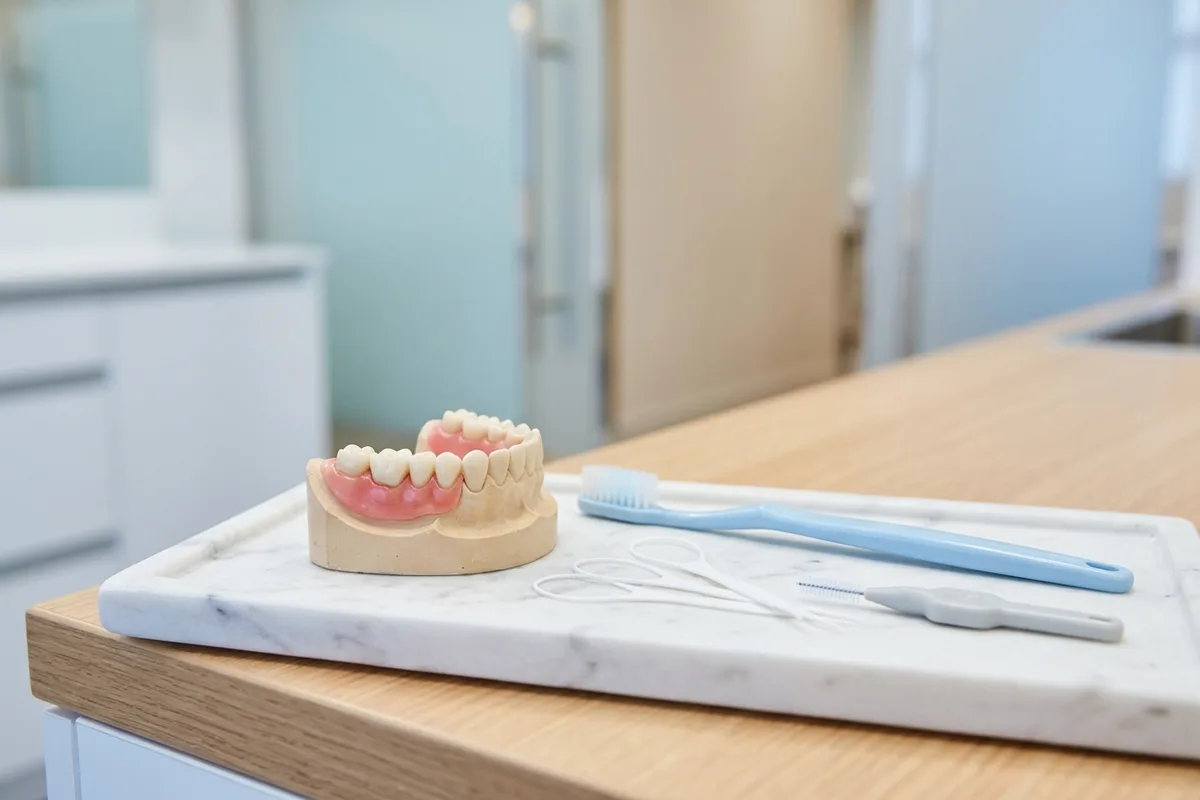
A dental bridge needs daily care to clear away sticky plaque from hard-to-reach spots. Follow this simple guide to brush, floss, and protect your teeth.
What You'll Need for Home Bridge Care
A dental bridge fills an open gap by joining a false tooth (pontic) to crowns on nearby natural teeth (abutments). Because these units are linked together, normal dental floss cannot slip down between the biting surfaces. Taking time to clear away soft germ film (dental plaque) stops decay and gum disease around the edges.
Your dental team can show you special tools that make daily cleaning under the false tooth much easier. Having the right supplies ready by your bathroom sink helps you build a steady habit every morning and night.[1][2][3][5]
- A soft-bristled toothbrush to sweep away food without scratching teeth
- Fluoride toothpaste with the American Dental Association seal
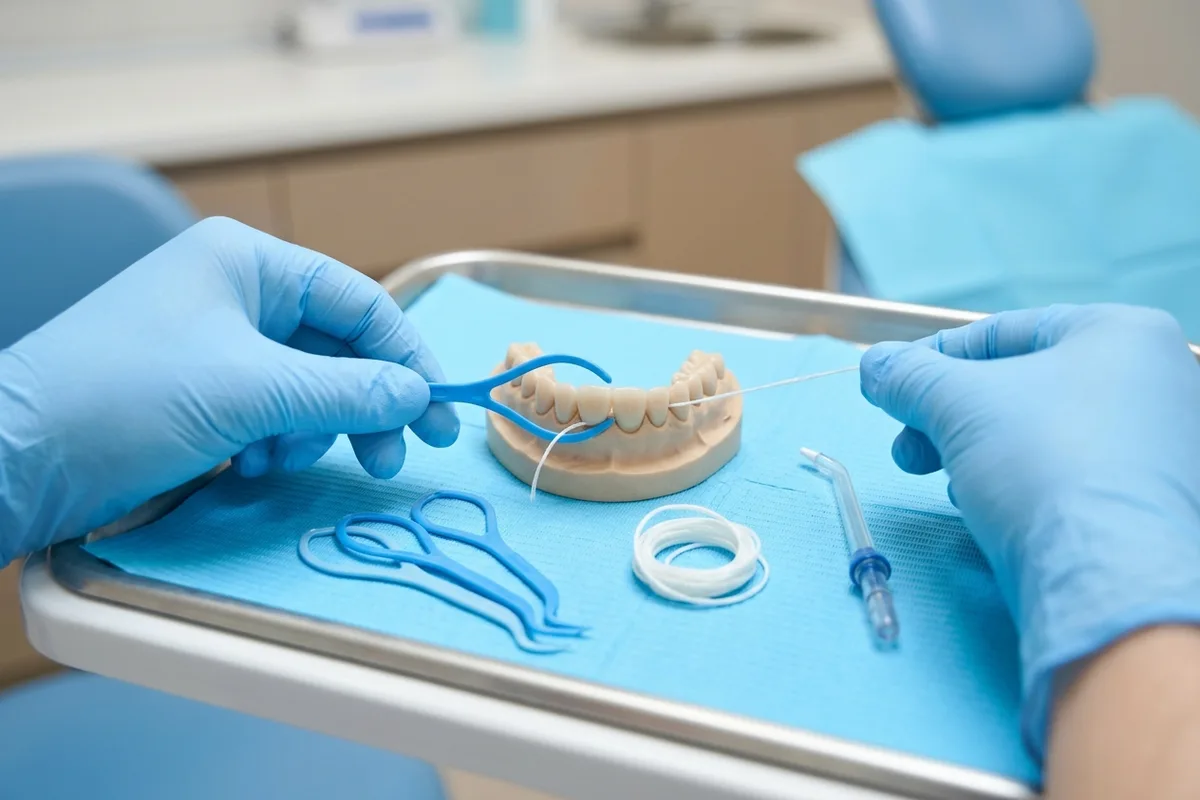
- A flexible floss threader or bridge floss with a stiff tip
- Tiny interdental brushes to slide into side spaces
- A water flosser or oral irrigator to rinse out debris
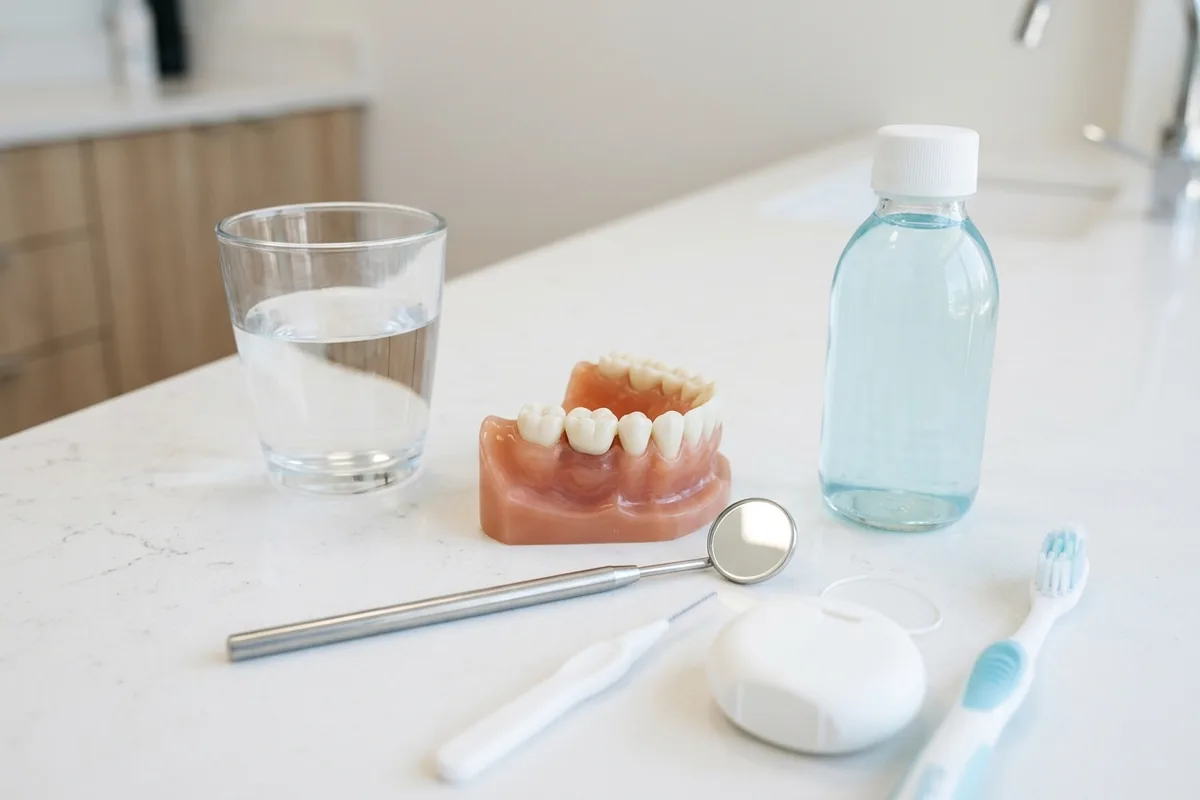
- An antibacterial mouth rinse recommended by your hygienist
Step by Step: How to Clean Plaque off Dental Bridge at Home
Following these daily steps clears away sticky plaque biofilm from hidden spots under your false tooth and protects your natural teeth.[1][2][3]
Brush All Tooth Surfaces for Two Minutes
Use your soft-bristled brush and fluoride toothpaste upon waking and before bed. Tilt the bristles at an angle toward your gumline to sweep away soft plaque around each crown. You'll know it's working when your tooth surfaces feel smooth to your tongue.[1][3]
Thread Your Dental Floss Under the False Tooth
Pass standard floss through the loop of a flexible plastic threader, then guide the stiff end between your teeth under the bridge. Pull the floss gently until it rests in the open space beneath the false tooth. Avoid snapping the thread hard against delicate gum tissue.[1][5]
Wipe the Base of the False Tooth
Curve the floss gently against the underside of the false tooth and slide it slowly back and forth. This motion cleans away trapped food and germ film that natural saliva cannot wash away on its own. You'll know it's working when the floss pulls out clean without foul debris.[1][2]
Clean the Sides of Supporting Teeth
Wrap your floss in a gentle curve around the side of each natural support tooth. Slide the strand up and down along the enamel edge to clear plaque where the crown meets the gum. Avoid pulling the floss sideways with harsh force that cuts your gums.[1][2]
Slide a Tiny Interdental Brush Between Gaps
Gently guide a miniature brush into the open spaces right beneath the bridge joints. The soft bristles scrub away stubborn buildup from side areas that standard brushes miss. You'll know it's working when the brush glides freely between the teeth without bending.[2][3]
Rinse Away Debris with an Oral Irrigator
Aim the stream of a water flosser along the gum margin and directly under the false unit. The pulsing water washes out loose bits of food and plaque from tight spaces. You'll know it's working when water runs clear from beneath your bridge into the sink.[5]
Rinse with an Antibacterial Mouthwash
Swish an antibacterial mouth rinse around your teeth for thirty seconds after you finish flossing and brushing. This step helps lower harmful oral bacteria and keeps your breath fresh all day. Avoid eating or drinking for thirty minutes after rinsing so the wash works well.[5]
Timeline: The First Few Weeks of Bridge Care
Getting used to cleaning around a fixed bridge takes a little practice as your gums adjust to daily threading.
| When | What to Expect | What to Do |
|---|---|---|
| First few days[1][5] | Mild gum tenderness and awkwardness while threading floss under the bridge | Move slowly and use a soft-tipped floss threader to protect sensitive tissue |
| First two weeks[1][3] | Less bleeding as gum tissue tightens and plaque buildup clears away | Keep up twice-daily brushing and daily flossing under the false tooth |
| Beyond one month[1][2] | Healthy pink gums, fresher breath, and easy daily cleaning routines | Continue regular home care and schedule in-office dental cleanings every six months |
What's Normal and What's Not
What to Expect During Daily Care
It is normal to need a few minutes to thread floss beneath the false tooth when you first begin. Mild bleeding can happen during the first week if plaque has irritated your gums, but this fades as your gums heal. Most bridges last over ten years when you keep up good daily care.[1][3]
Warning Signs That Need Attention
Puffy gums that bleed after two weeks of steady cleaning are not normal. You should also watch out for persistent toothache, sharp pain while chewing, or sudden twinges from hot or cold foods. Bad breath that will not go away can signal trapped plaque or loose dental cement under a crown.[1][2]
When to Call Your Dentist
Call your dental office if your bridge feels loose, shifts when you bite, or makes a clicking sound. A loose crown lets saliva and plaque leak underneath, which leads to new decay (secondary caries) on your support tooth. When decay grows under a crown, fixing it may require root canal care or tooth removal.
You should also schedule a visit if you notice mouth sores that do not heal after two weeks or ongoing jaw swelling. Tell your dental team how long your symptoms have lasted and whether your teeth react to temperature.[1][2][3]
Your Checklist
Review these simple habits before the end of your first week to ensure your cleaning routine keeps your mouth healthy.[1]
- Do brush twice each day for two full minutes using fluoride toothpaste
- Do thread floss beneath the false tooth every single day
- Do choose a toothpaste that carries the official ADA seal
- Don't chew hard ice chips, nuts, or hard candy that can chip dental work
- Don't eat sticky caramel or chewy snacks that pull on crowns
- Don't force wire brushes into tight spaces where they do not slide easily
Habits That Help Long-Term
Keeping a bridge clean over many years involves more than just brushing and flossing. Good daily hygiene lowers the rate of new decay around bridges down to four percent, compared to over eighteen percent with poor care. A long-term study showed an eighty-eight percent chance of avoiding new decay with good daily habits, compared to only forty percent without them.
Cutting down on sugary foods and sweet drinks stops oral bacteria from producing harmful acids that eat away tooth enamel. In addition, avoiding all tobacco products and limiting alcohol protects your gums from severe disease and mouth sores.[1][2][3]
The Bottom Line on Bridge Care
Fixed bridges need daily flossing with threaders because standard floss cannot pass between joined teeth. Cleaning away soft plaque keeps your gums firm and protects your natural anchor teeth from decay. In-office dental checkups allow your hygienist to remove hard buildup (calculus) and check your crowns.
If you live near Chino, CA, you can talk through your dental cleaning routine and bridge care with Dr. Yiyang Zou at One Ounce Dental.[1][4]
Sources
- Bridges — urmc.rochester.edu
- Secondary caries in fixed dental prostheses: Long‐term clinical evaluation — pmc.ncbi.nlm.nih.gov
- Oral Health for Older Adults: Quick Tips — odphp.health.gov
- Dental Hygiene — smileexperts.osu.edu
- Dental Specialties PPT — sites.wp.odu.edu
Common questions
Frequently asked questions
Questions about your own smile?
Have questions about caring for your crowns and bridges? Contact One Ounce Dental in Chino, CA, to request an appointment and talk with our team.
More Articles
View all Dental care
Why Do I Have a Metallic Taste in My Mouth? 7 Common Causes
A lingering metallic flavor can come from swollen gums, everyday drugs, sinus colds, or dry mouth. Learn what causes this strange taste and how to find relief.November 17, 2026 · 6 min read Dental care
Why Is My Tongue White? 7 Common Causes
A white tongue can stem from harmless debris, surface irritation, fungal thrush, or precancerous patches. Discover what causes these color changes, how to spot warning signs, and when to seek dental care.November 16, 2026 · 6 min read Dental care