

Impacted Wisdom Tooth Symptoms Treatment: A Patient Guide to Wisdom Teeth Removal
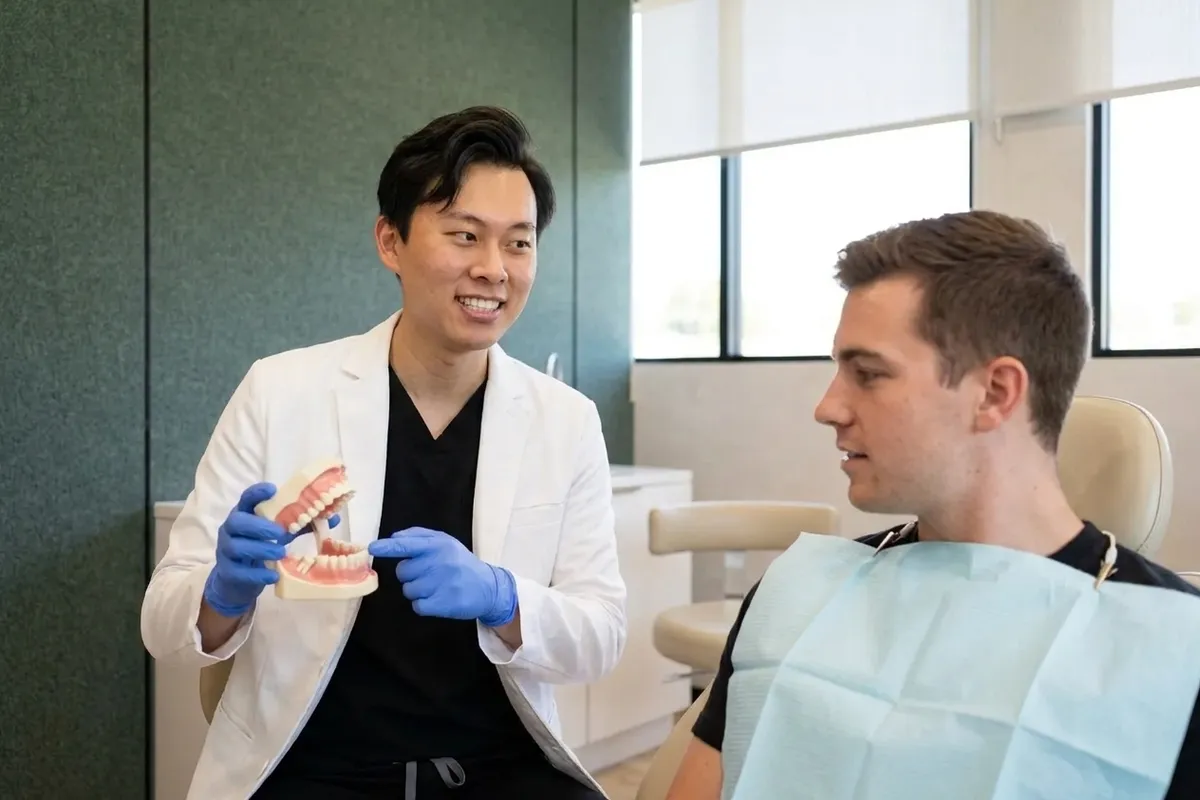
Searching for impacted wisdom tooth symptoms treatment options is common when third molars become trapped. Discover why these teeth fail to emerge properly and when a dentist might recommend wisdom teeth removal.
Understanding Impacted Wisdom Teeth
Wisdom teeth, or third molars, typically emerge between the ages of seventeen and twenty-one. When these teeth cannot fully break through the gums, they are considered impacted, which often leads a dentist to evaluate them for potential wisdom teeth removal.[1][2]
The mechanics of impaction
An impacted tooth remains partially or completely trapped within the gums or the underlying jawbone. This occurs when the dental arch lacks sufficient room to accommodate the new molars, forcing them to develop abnormally instead of taking a healthy position alongside your other functional teeth.[1][2]
The role of surgical extraction
When an impacted wisdom tooth causes active problems, the standard evidence-based treatment is surgical extraction. Removing the problematic tooth addresses the immediate symptoms and helps protect the surrounding dental structures from localized infections, extensive decay, or damage to your neighboring healthy teeth over time.[1][2][3]
Why Wisdom Teeth Become Impacted
Several structural factors determine whether a third molar will emerge normally or become trapped. Dentists look at the available space in your mouth and the angle of the developing tooth to assess your risk for future complications.[1][2]
Insufficient space in the dental arch
The primary cause of impaction is a lack of adequate space in the back of the jaw. Without enough room to erupt vertically, the wisdom tooth is physically blocked from entering the mouth, leading it to remain permanently buried beneath the gum tissue or bone.[1][2]
Abnormal growth angles
Because of the restricted space, wisdom teeth often grow at an angle rather than straight up. They may tilt toward the adjacent second molar, angle toward the back of the mouth, or even grow horizontally, which prevents normal eruption and increases the likelihood of partial impaction.[1][2]
Recognizing the Symptoms of Impaction
While some impacted wisdom teeth never cause discomfort, others can trigger noticeable issues as they attempt to erupt or when they trap debris. Recognizing these signs early helps you know when to seek a professional dental evaluation.[1][2]
Common warning signs
Symptomatic impacted teeth often cause red, swollen, or bleeding gums, along with persistent jaw pain and localized swelling. You might also notice bad breath, an unpleasant taste in your mouth, or difficulty opening your jaw fully, which indicates that the area requires professional attention.[1][2]
How Dentists Assess Third Molars
Because impaction cannot be prevented, regular dental visits are crucial during the late teens and early twenties. A dentist will monitor the development of your third molars to determine if they are emerging safely or becoming trapped.[1][2]
The role of diagnostic imaging
During an examination, a dentist relies heavily on dental X-rays to see the exact position of the wisdom teeth hidden beneath the gums. These images reveal the angle of growth, the depth of the impaction, and the tooth's proximity to sensitive nerves and neighboring roots.[1][2]
Comparing Treatment Approaches
The recommended approach for an impacted wisdom tooth depends heavily on whether it is causing symptoms or posing a risk to surrounding tissues. A dentist or oral surgeon will discuss the tradeoffs between immediate removal and ongoing observation.[1][3]
Surgical removal for symptomatic teeth
For teeth that cause pain, swelling, or infection, surgical extraction is the standard recommended treatment. Removing the tooth permanently resolves the symptoms and eliminates the localized environment where bacteria and food particles become trapped, thereby protecting the rest of your mouth from spreading decay.[1][2][3]
Active surveillance for asymptomatic cases
If an impacted wisdom tooth is completely asymptomatic and disease-free, a dentist might recommend active surveillance. This alternative involves leaving the tooth in place and monitoring it with regular X-rays to ensure it does not develop cysts, tumors, or damage nearby teeth over time.[1][3]

The Surgical Extraction Process
When extraction is necessary, the procedure is carefully planned to safely remove the trapped tooth. Understanding the steps involved in surgical removal can help you prepare for the appointment and feel more comfortable about the treatment.[1][2]
Preparing for the procedure
Before the surgery, your dental provider will carefully review your X-rays and discuss the specific surgical plan. They will explain the type of anesthesia or sedation that will be used to ensure you remain completely comfortable and pain-free while the impacted tooth is being extracted.[1][2]
Removing the impacted tooth
During the procedure, the dentist or oral surgeon carefully accesses the trapped tooth by opening the gum tissue and, if necessary, removing a small amount of overlying bone. The tooth may be divided into smaller sections to make it easier to extract safely before the gums are closed.[1][2]
Protecting Your Oral Health
Proper care after an extraction or during active surveillance is essential for maintaining a healthy mouth. Managing your oral hygiene helps prevent the complications that are commonly associated with partially emerged or fully trapped third molars.[1][2]
Preventing localized infections
Partially impacted teeth create small openings in the gums that easily trap food particles and oral bacteria. This environment frequently leads to pericoronitis, which is a painful, localized gum infection. Maintaining excellent oral hygiene and attending regular dental cleanings can help manage this risk during active surveillance.[1][2]
Avoiding long-term complications
Whether you choose extraction or monitoring, the goal is to prevent long-term damage to your dental arch. Unmanaged impacted teeth can eventually cause structural damage to adjacent second molars or lead to the formation of cysts and tumors within the jawbone if left unchecked.[1][2][3]
- Attend routine dental examinations.
- Keep the back of the mouth clean.
- Report any new jaw pain or swelling.
- Update dental X-rays as recommended.
Addressing Complications and Moving Forward
Ignoring the symptoms of an impacted wisdom tooth can lead to worsening pain and spreading infections. Timely professional intervention is the most effective way to mitigate these risks and determine the safest path forward for your smile.[1][2]
Scheduling a professional evaluation
If you experience persistent jaw pain, swollen gums, or a bad taste in your mouth, you should contact a dental professional promptly. A thorough clinical evaluation will identify whether an impacted wisdom tooth is the cause and help you decide if surgical extraction is necessary.[1][2]
Sources
- Wisdom Teeth — American Dental Association
- Impacted tooth — medlineplus.gov
- Surgical removal versus retention for the management of asymptomatic disease-free impacted wisdom teeth — pubmed.ncbi.nlm.nih.gov
Common questions
Frequently asked questions
Talk with One Ounce Dental about your next step
If you are experiencing jaw pain or suspect you have an impacted wisdom tooth, contact One Ounce Dental today. Book an appointment so our team can evaluate your symptoms and discuss your individual treatment options.
More Articles
View all Dental care
How to Straighten Teeth Without Braces (Step-by-Step)
Wondering how to straighten teeth without braces? Custom clear trays can gently shift your smile into place when you follow key daily steps, wear them enough hours, and keep your teeth clean.October 16, 2026 · 6 min read Preventive & General
Enamel Erosion Symptoms: A Patient Guide to Dental Cleaning and Exams
Enamel erosion involves the chemical loss of tooth structure from acids. Understanding the early signs and risk factors can help you discuss prevention strategies during your regular dental cleaning and exams.October 15, 2026 · 6 min read Preventive & General