

Partial Dentures: Restoring Chewing, Speech, and Smile Appearance
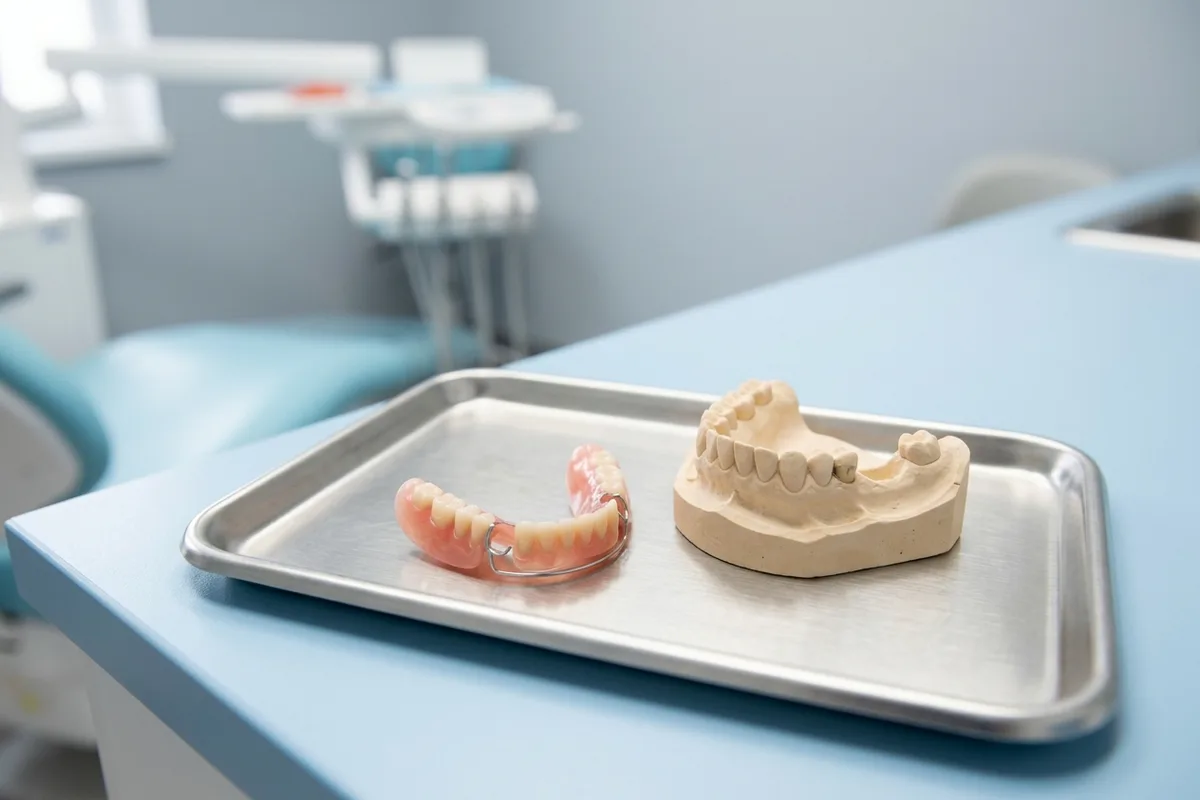
Learn how removable partial dentures restore dental function and appearance, explore clasp and attachment styles, and review proper daily hygiene techniques to maintain long-term oral health and comfort.
Understanding Partial Dentures and Arch Restoration
Removable partial dentures serve as a central option within general dentures care for patients missing several teeth. Rather than replacing an entire dental arch, these appliances integrate alongside remaining natural teeth to rebuild chewing capability and maintain personal appearance.[1][2]
Component Structure of Partial Appliances
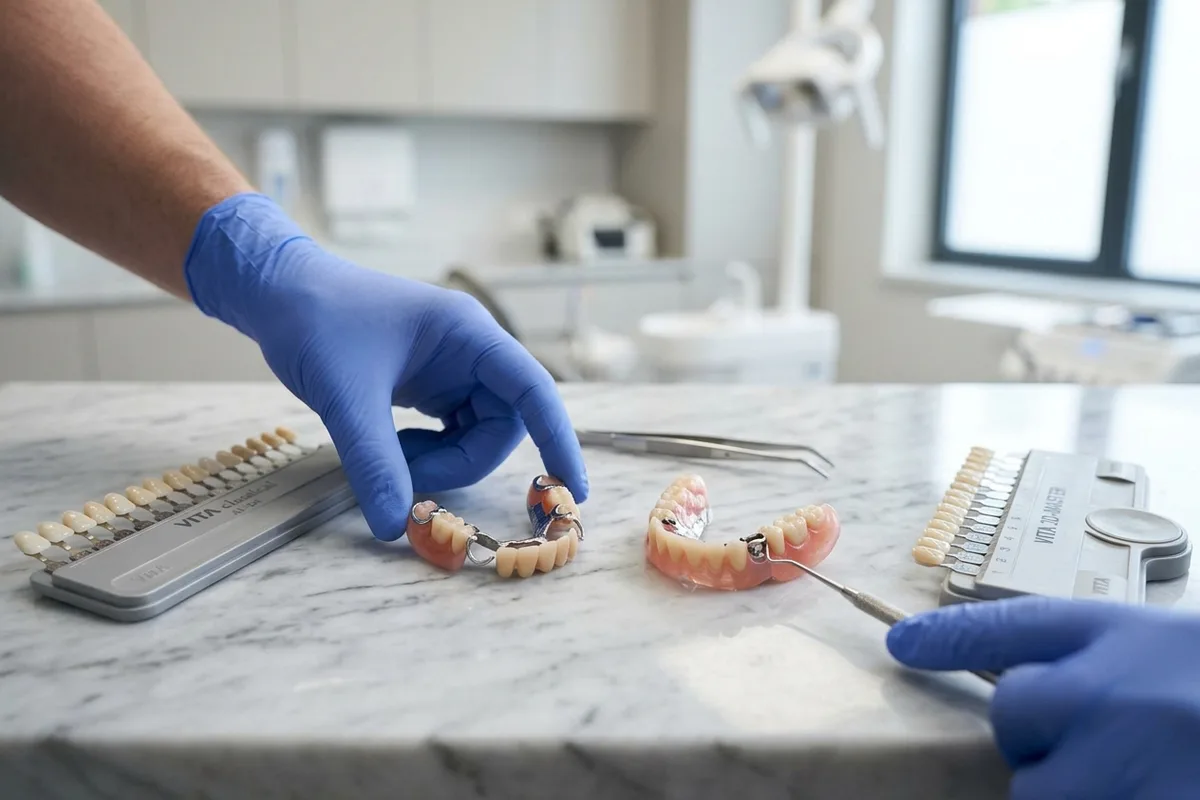
A standard partial denture features natural-looking artificial teeth embedded into a pink, gum-colored plastic base. The appliance stays securely anchored within the mouth by gripping nearby healthy natural teeth with metal clasps, subtle connectors, or specialized precision attachments that stabilize the prosthetic structure during normal daily use.[1]
Functional and Aesthetic Advantages
Replacing absent natural teeth does more than complete a person's smile; it noticeably improves everyday speech clarity and eating comfort. Moreover, these appliances can help fill out the appearance of the face and profile.[2]
Clinical Factors Influencing Treatment Candidacy
Tooth loss often results from severe periodontal infections.[4]
Periodontal Health and Tissue Support
Periodontal disease represents a primary cause of adult tooth loss and can develop silently without pain. Persistent bacterial infection damages bone and supporting tissues, loosening teeth. If periodontal issues progress, changes in gum and bone contour can alter how a partial denture fits, signaling active oral health concerns.[4]
Saliva Production and Oral Comfort
Adequate saliva flow is necessary to cushion the mouth against the friction of an acrylic base. When saliva decreases, appliances can slip or rub painfully against delicate tissues, creating sore spots while increasing susceptibility to oral fungal infections and dental decay on remaining natural teeth.[5]
Recognizing Changes in Fit and Tissue Health
Recognizing when to pursue replacement teeth or re-evaluate an existing appliance helps avoid progressive oral complications. Unaddressed tooth loss alters daily comfort, while sudden changes in dental stability require timely professional attention to preserve surrounding oral structures.[2][4]
Signs That Warrant Appliance Re-Evaluation
A noticeable change in how a partial denture fits can indicate untreated gum disease. Warning indicators requiring clinical review include red, bleeding, or receding gums, chronic bad breath, shifting natural teeth, or painful pressure areas that persist during regular chewing.[4][5]
Clinical Assessments for Appliance Planning
Routine dental visits remain vital even after appliance placement to monitor mouth structures and confirm ongoing comfort.[2][3]
Assessing Supporting Teeth and Gums
During an assessment, dentists check gum tissue for inflammation, examine remaining teeth, and verify structural fit. Because periodontal disease can advance without noticeable discomfort, regular examinations help clinicians detect bone loss early.[2][4]
Comparing Attachment Styles and Prosthetic Designs
Dentistry offers distinct restorative designs depending on tissue support, budget, and aesthetic preferences. Understanding the differences among clasp types, overdentures, and complete dentures helps patients select an approach that aligns with their personal oral rehabilitation goals.[1][2]
Metal Clasps Compared to Precision Connectors
Traditional partial dentures rely on visible metal clasps that wrap around existing anchor teeth. Alternatively, precision attachments provide a more natural, seamless appearance without visible metal. However, precision attachments generally cost more and typically require the placement of supportive crowns over adjacent natural teeth to secure the connector mechanism.[1]
Overdentures and Full Arch Prosthetics
When widespread tooth loss leaves few salvageable teeth, overdentures can fit over preserved natural roots or dental implants to stabilize the bite and preserve jawbone. In contrast, conventional full dentures replace an entire arch months after extractions, whereas immediate dentures are placed the day teeth are removed.[2]
Placement Technique and the Adaptation Process
Acquiring and adapting to a partial denture involves precise insertion techniques and a gradual acclimation process. Patients must understand how to handle their prosthesis properly to avoid bending metal components or causing unnecessary soft-tissue irritation.[1][2]
Correct Insertion and Seating Guidelines
Patients should always seat a partial denture by carefully aligning it and gently pressing it into place using fingers. Wearers must never bite down to force the appliance home, as the extreme force of jaw muscles can easily bend connectors or fracture delicate clasps.[1]
Adapting to Chewing and Speaking
A new partial denture can feel bulky, loose, or awkward initially, sometimes triggering temporary increases in saliva flow as mouth muscles adjust. Chewing small bites of soft food evenly across both sides minimizes movement, while reading aloud and repeating troublesome words helps re-establish natural speech patterns.[1][2]
Maintenance Routines and Daily Hygiene Practices
Long-term comfort depends heavily on daily maintenance routines and consistent appliance hygiene. Proper sanitization protects oral mucosal tissues from infection, prevents base warping, and prolongs the service life of both the appliance and adjacent natural teeth.[1][5]
Sanitizing and Storing the Appliance
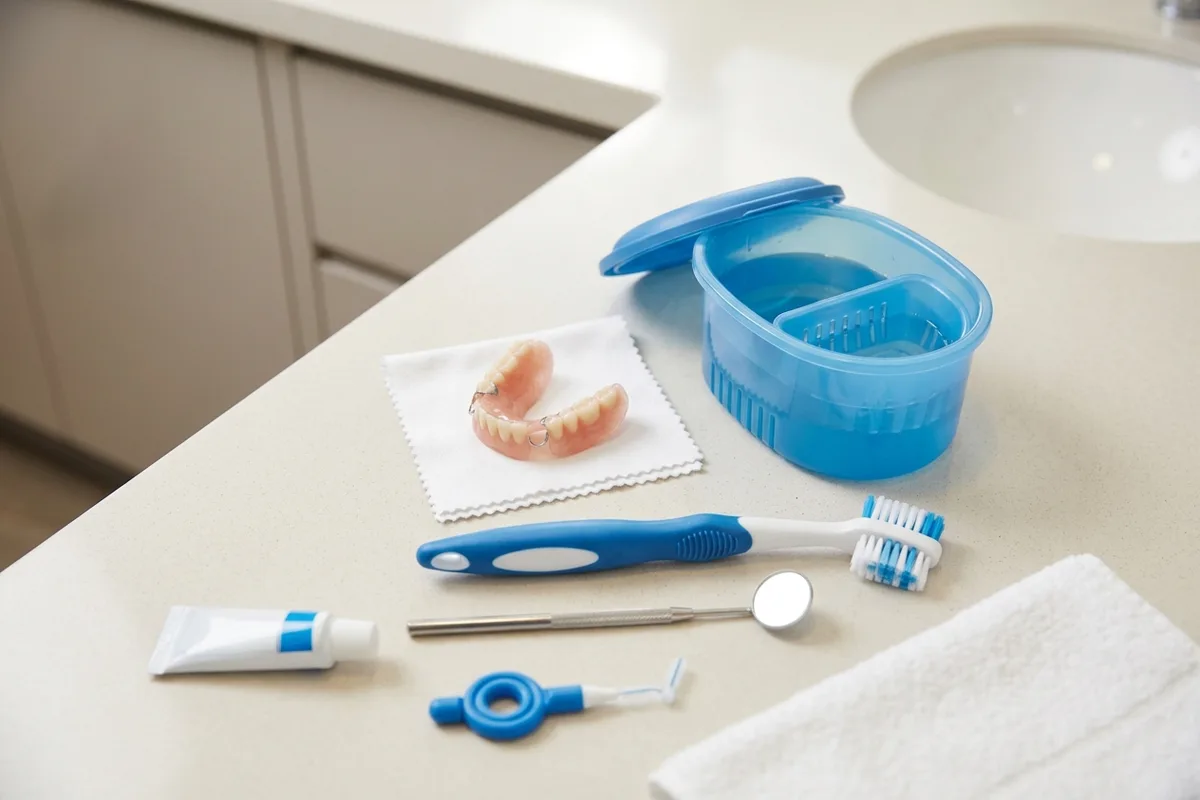
Maintaining pristine hygiene prevents oral infections and protects delicate prosthetic materials from preventable damage. Partial dentures should be rinsed after every meal and brushed daily with a soft toothbrush and non-abrasive cleanser. Never clean them with regular abrasive toothpaste, which scratches acrylic surfaces and attracts persistent stains.[1][2][3]
- Rinse the appliance under clean water after eating to remove lingering food particles.
- Brush daily using a soft-bristle brush with mild hand soap, dishwashing liquid, or approved denture cleanser.
- Thoroughly rinse off cleaning agents with water before placing the prosthesis back into the mouth.
- Submerge the appliance completely in water or soaking cleanser overnight to prevent the base from warping.
Nighttime Removal and Tissue Health
Partial dentures must always be removed before going to sleep or napping to prevent accidental dislodging and dangerous choking hazards. Overnight removal allows soft gum tissues to rest after pressure-bearing daytime wear, and brushing the palate, tongue, and gums each morning stimulates tissue circulation while eliminating accumulated bacteria.[1][2][3]
Long-Term Appliance Changes and Professional Adjustments
Natural changes in oral anatomy mean that partial dentures require periodic adjustments throughout their lifespan. Over time, jawbone and gum ridges naturally recede, which causes appliances to loosen and potentially cause painful mouth sores or infections if left uncorrected.[1]
Avoiding Self-Repair and Seeking Relining
If an appliance loosens, cracks, or loses a tooth, patients should consult their dentist immediately for professional adjustments rather than using do-it-yourself repair kits. Over-the-counter glues can permanently ruin prostheses and expose wearers to dangerous chemicals, whereas chairside modifications safely relieve sore spots.[1]
Sources
- Dentures Partial — American Dental Association
- Dentures — American Dental Association
- The Caregiver's Guide to Dental Health — American Dental Association
- Gum Disease — American Dental Association
- Dry Mouth & Older Adults: Information for Caregivers — National Institute of Dental and Craniofacial Research
Common questions
Frequently asked questions
Questions about your own smile?
If you are considering partial dentures or need an evaluation for your current appliance, request an appointment at One Ounce Dental in Chino, CA, by calling 909.283.3130 to discuss your personalized treatment options.
More Articles
View all Preventive & General
Does Green Tea Stain Your Teeth: A Patient Guide to Professional Teeth Whitening
Tea contains pigments that can attach to tooth enamel over time. While a laboratory study shows green tea deposits elements on teeth, this evidence does not establish visible everyday staining. If discoloration occurs, professional teeth whitening may lighten natural teeth.October 12, 2026 · 5 min read Preventive & General
Why Are My Teeth Sensitive All Of A Sudden: A Patient Guide to General Dentistry
Experiencing sudden tooth sensitivity can be uncomfortable and alarming. Whether triggered by hot coffee or cold ice cream, understanding why your teeth are sensitive all of a sudden is the first step toward finding relief and protecting your smile.October 9, 2026 · 5 min read Dental care