

Rotting Teeth: A Patient Guide to General Dentistry

Tooth decay is a progressive condition that can lead to severe damage if left untreated. Understanding the causes and available treatments can help you restore your smile and protect your oral health without judgment.
Understanding Tooth Decay and the Decay Process
To understand why teeth appear to rot, it is helpful to look at the biological processes occurring inside the mouth. Tooth decay is not something that happens overnight; it is a continuous, infectious process driven by specific types of bacteria.[1][2]
The Role of Dental Plaque and Oral Bacteria
The human mouth naturally harbors hundreds of different types of bacteria. Some of these bacteria form a sticky, colorless film over the teeth known as dental plaque. When you consume foods and beverages that contain sugars and starches, the bacteria within the plaque feed on these carbohydrates. As a byproduct of this consumption, the bacteria produce strong acids that remain trapped against the surface of the teeth.[1][2]
The Demineralization Process
The acids produced by plaque bacteria attack the tooth enamel, which is the hard, protective outer layer of the tooth. This acid attack causes the enamel to lose essential minerals like calcium and phosphate in a process called demineralization. If minerals are lost faster than they can be replaced by saliva and fluoride, the enamel weakens and eventually collapses, forming a physical hole or cavity.[2]
Common Causes and Risk Factors for Cavities
While bacteria and acid are the direct mechanisms of tooth decay, several lifestyle and biological factors can significantly increase a person's risk of developing severe cavities.[1][3]
Dietary Habits and Sugar Consumption
Frequent snacking or sipping on sugary and acidic foods and drinks is one of the primary risk factors for tooth decay. Every time sugar is consumed, the teeth are subjected to an acid attack that lasts for about twenty minutes. Continuous snacking prevents the mouth from neutralizing these acids, leading to accelerated enamel breakdown.[1][4]
Dry Mouth and Receding Gums
Saliva is the mouth's natural defense against decay; it washes away food particles and provides the minerals needed to repair early enamel damage. A condition known as dry mouth reduces saliva production, leaving teeth highly vulnerable to decay. Additionally, receding gums can expose the roots of the teeth. Because tooth roots are not covered by protective enamel, they decay much more rapidly than the crown of the tooth.[1]
Recognizing the Progressive Stages of Tooth Decay
Tooth decay progresses through several distinct stages. Recognizing these stages can help patients seek intervention before the damage becomes severe.[1][2]
Early Warning Signs and White Spots
In its earliest stage, tooth decay is often completely asymptomatic. The first visible sign is usually a chalky white spot on the surface of the tooth. This spot indicates an area of demineralization where the enamel has begun to lose its structural integrity but has not yet formed a cavity.[2]
Advanced Decay and Cavity Formation
If the demineralization continues, the enamel will eventually break down, resulting in a cavity. Once a physical hole forms, the decay can spread into the dentin, the softer layer beneath the enamel. Because dentin is less dense, decay spreads much faster once it reaches this layer, moving closer to the sensitive inner nerve of the tooth.[1][2]
Symptoms You Should Not Ignore
As tooth decay advances from a minor cavity to what is commonly described as a rotting tooth, patients will typically begin to experience noticeable and uncomfortable symptoms.[1][3]
Tooth Sensitivity and Localized Pain
One of the most common indicators of advancing decay is sharp sensitivity to hot, cold, or sweet foods and beverages. As the cavity grows deeper and approaches the dental pulp, this sensitivity often transitions into a persistent, throbbing toothache that can occur spontaneously or when biting down.[1]
Visible Discoloration and Structural Damage
Severe decay often causes visible changes to the tooth. Patients may notice deep brown or black staining on the tooth's surface. In advanced cases, visible holes or pits become apparent, and portions of the tooth may even chip or break off during normal eating, leading to difficulty chewing and speaking.[1][3]
Professional Treatments for Decayed Teeth
The appropriate treatment for tooth decay depends entirely on how far the condition has progressed. Dentists utilize a variety of techniques to remove the infection and restore the tooth.[1][3]
Reversing Early Decay with Fluoride Treatments
If decay is caught in the very early white-spot stage, it can sometimes be stopped or even reversed. Dentists can apply professional-grade fluoride varnishes or gels to the affected area. This process, known as remineralization, helps rebuild the weakened enamel and prevents a cavity from fully forming.[1][4]
Dental Fillings for Moderate Cavities
Once a cavity has formed, the tooth can no longer heal itself. A dentist must physically remove the decayed and infected tissue using specialized instruments. After the damaged area is cleaned, the missing structure is replaced with a dental filling, usually made of a tooth-colored composite resin, to restore the tooth's shape and function.[3]

Restorative Options for Severe Decay
When a tooth is extensively decayed or rotting, a simple filling may not provide enough structural support. In these cases, more advanced restorative procedures are required.[1][3]
Dental Crowns for Structural Support
If a significant portion of the tooth has decayed away, a dentist may recommend a dental crown. A crown is a custom-made cap that completely covers the remaining healthy tooth structure. The dentist will remove all the decay, shape the tooth, and place the crown to restore its strength, size, and appearance.[3]
Root Canal Therapy for Pulp Infection
If the decay reaches the innermost layer of the tooth, known as the pulp, the nerve and blood vessels become infected. This often causes severe pain. To save the tooth, a dentist or endodontist will perform a root canal. This involves removing the infected pulp, cleaning and disinfecting the inner canals, and sealing the tooth, which is typically followed by the placement of a crown.[1][3]
When Tooth Extraction Becomes Necessary
While modern dentistry prioritizes saving natural teeth whenever possible, there are instances where a rotting tooth is too severely damaged to be repaired.[3]
Removing Severely Compromised Teeth
If the decay has destroyed too much of the tooth structure to support a crown, or if a severe infection has compromised the surrounding bone, tooth extraction may be the only viable option. Removing the tooth eliminates the source of the infection and prevents the bacteria from spreading to neighboring teeth or other parts of the body.[3]
The Importance of Replacing Missing Teeth
Following an extraction, it is highly recommended to replace the missing tooth. Leaving a gap in your smile can cause surrounding teeth to shift out of alignment and lead to bone loss in the jaw. Dentists can replace extracted teeth using dental implants, bridges, or partial dentures to restore full chewing function and aesthetics.[3]
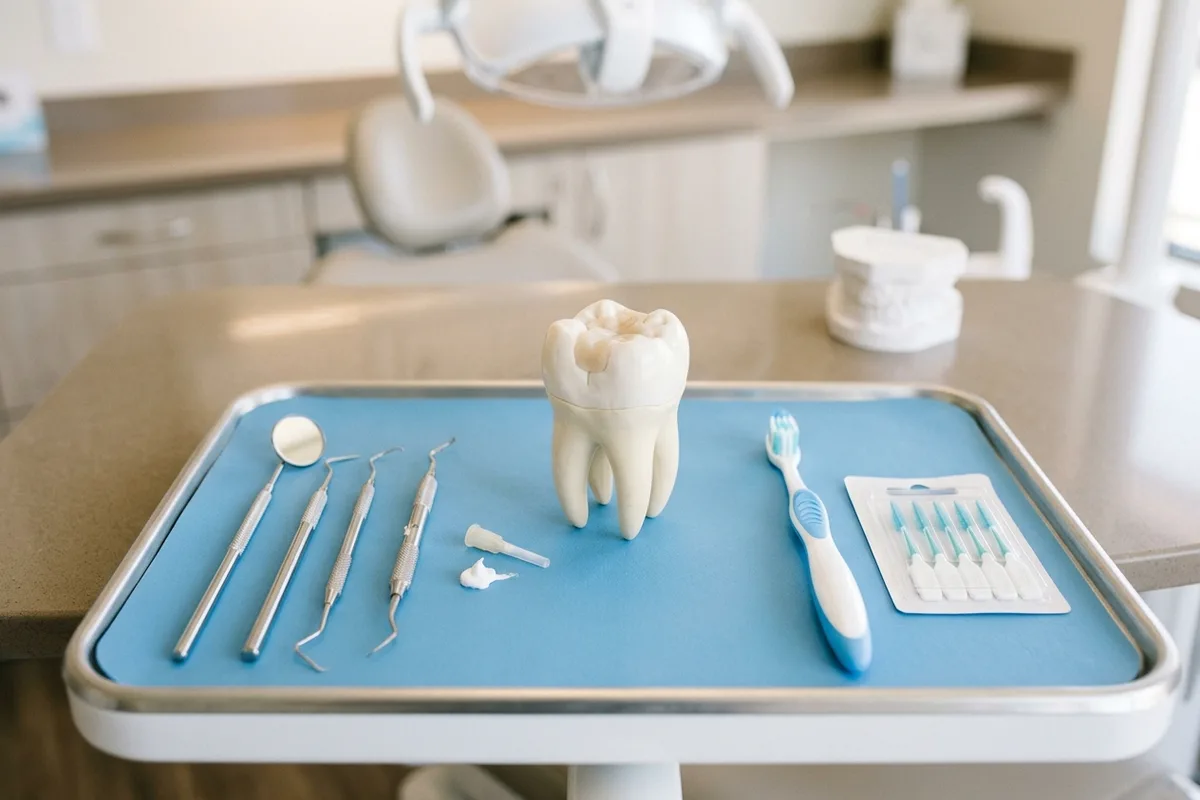
Proven Strategies for Cavity Prevention
Preventing tooth decay is always preferable to treating it. By adopting a proactive approach to oral health, you can protect your teeth from the acid attacks that cause decay.[4]
Daily Oral Hygiene Practices
The foundation of cavity prevention is excellent home care. The American Dental Association recommends brushing your teeth twice a day using a fluoride toothpaste. Cleaning between your teeth daily with floss or interdental brushes is equally important, as it removes plaque from areas a toothbrush cannot reach. Additionally, drinking fluoridated tap water helps strengthen enamel throughout the day.[4]
- Brush twice daily with fluoride toothpaste.
- Floss or clean between teeth once a day.
- Drink fluoridated tap water.
- Limit sugary snacks and beverages between meals.
The Benefits of Dental Sealants
Dental sealants offer an extra layer of protection, particularly for the back teeth (molars). Sealants are thin, protective coatings painted onto the chewing surfaces of the teeth. They fill in the deep grooves and pits where food and bacteria often get trapped, creating a smooth surface that is much easier to keep clean and highly effective at preventing cavities.[4]
Sources
- nih.gov — National Institute of Dental and Craniofacial Research
- nih.gov — National Institute of Dental and Craniofacial Research
- mouthhealthy.org — American Dental Association
- mouthhealthy.org — American Dental Association
Common questions
Frequently asked questions
Talk with a dentist about your next step
If you are experiencing tooth pain or are concerned about tooth decay, do not wait for the symptoms to worsen. Contact One Ounce Dental today to schedule a comprehensive examination. Our compassionate team is here to provide the restorative care you need to achieve a healthy, pain-free smile.
More Articles
View all Dental care
How to Straighten Teeth Without Braces (Step-by-Step)
Wondering how to straighten teeth without braces? Custom clear trays can gently shift your smile into place when you follow key daily steps, wear them enough hours, and keep your teeth clean.October 16, 2026 · 6 min read Preventive & General
Enamel Erosion Symptoms: A Patient Guide to Dental Cleaning and Exams
Enamel erosion involves the chemical loss of tooth structure from acids. Understanding the early signs and risk factors can help you discuss prevention strategies during your regular dental cleaning and exams.October 15, 2026 · 6 min read Preventive & General