

The Best Type of Veneer, Compared
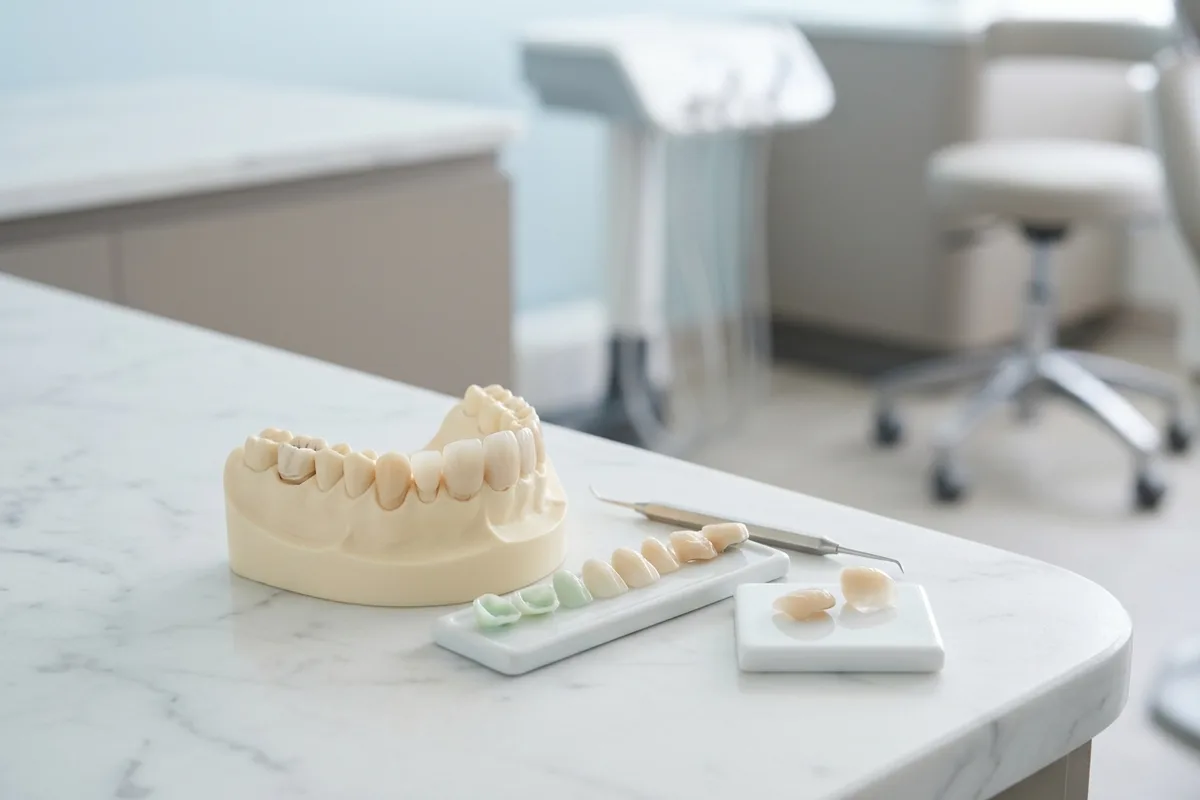
Find the best type of veneer for your smile by comparing strength, natural appearance, and how long each dental shell lasts so you can make a confident choice.
The Options at a Glance
No single tooth covering works best for every person because your mouth has its own unique needs. Veneers are thin custom shells that your dentist bonds to the front of teeth to improve your smile. The right material for you depends on your daily habits, enamel thickness, and aesthetic goals. Looking at each choice side by side helps you pick the right match for your teeth.[1][2][5]
- Feldspathic porcelain: best for a natural look that mimics front tooth enamel.
- Lithium disilicate glass-ceramic: best for extra durability with pleasing lifelike color.
- Direct composite resin: best for fast shape changes during a single office visit.
- Zirconia ceramic: best for strong fracture resistance against heavy biting forces.
Side by Side: All the Options
This comparison table shows how the four main veneer materials perform across key dental measures.
| Veneer Material | How Long It Lasts | What It Involves | Best For |
|---|---|---|---|
| Feldspathic porcelain[1][2][5] | 10 to 20 years | Shaving outer enamel and lab fabrication | Lifelike front smile |
| Lithium disilicate[4][5] | 10 to 15 years | Enamel trimming and bonded glass-ceramic | High strength and beauty |
| Direct composite resin[1][5] | 3 to 7 years | Shaping resin directly on tooth in one visit | Fast single-day fixes |
| Zirconia ceramic[4] | Long-term durability | Enamel preparation and high-strength milling | Heavy biting stress |
How We Compared the Best Type of Veneer Options
We evaluated each veneer material using clear clinical measures that directly affect your smile over time. First, we looked at how long each material holds up under everyday chewing before needing replacement. Next, we reviewed how closely each shell matches natural enamel and resists stains from food or drinks. Finally, we checked how much tooth structure your dentist must remove to place each type safely.[1][2][5]
Feldspathic Porcelain Veneers: Best for Lifelike Front Teeth
Feldspathic porcelain is a classic ceramic material crafted in layers by a skilled dental laboratory. Because the glass material is very thin and clear, light passes through it just like natural enamel. Your dentist takes an impression of your teeth so the lab can craft custom-fitting shells. Best for people who want the most natural shine on their visible front teeth.[1][2][4]
Pros
- Provides natural translucency that blends smoothly with your surrounding teeth.
- Clinical studies show a 91% to 96% survival rate after 10 to 20 years.
- Strongly resists stains caused by dark liquids or normal daily eating habits.
- Patients report high personal satisfaction with the appearance of these porcelain shells.
Cons
- Low flexural strength makes thin edges prone to chipping under high force.
- Sheer translucency makes it hard to mask severe dark stains beneath the tooth.
- Requires removing outer enamel, which means the tooth treatment is permanent and irreversible.
- Takes multiple dental visits and a higher financial investment than resin bonding.
Lithium Disilicate Veneers: Best for Added Strength and Good Looks
Lithium disilicate is a modern glass-ceramic known for combining high physical strength with pleasing beauty. Dental laboratories can mill or press this material into strong shells that fit precisely over teeth. These restorations resist chipping much better than older porcelains while still providing excellent light reflection. Best for patients needing durable front tooth shells that withstand everyday biting pressure.[4]
Pros
- Offers high flexural strength between 250 and 400 MPa to prevent cracking.
- Achieves an overall survival rate of 89% after an average of nine years.
- Provides versatile shade levels to cover underlying tooth stains effectively.
- Resists chipping far better than delicate traditional feldspathic porcelain materials.
Cons
- Requires removing a small layer of outer tooth enamel before permanent bonding.
- Permanent enamel removal means the prepared teeth will always need protective coverings.
- Requires multiple visits while a specialized dental laboratory crafts the ceramic shells.
Direct Composite Veneers: Best for Quick Single-Visit Care
Direct composite veneers use tooth-colored resin that your dentist applies directly onto your natural enamel. Your dentist carefully shapes and polishes the resin right in the chair during a single visit. This gentle process often requires less enamel removal than lab-made ceramic tooth shells. Best for people who want quick cosmetic changes or minor tooth repairs in one appointment.[1][2][5]
Pros
- Can be placed and polished in a single visit without dental lab waiting times.
- Saves more natural enamel than traditional ceramic veneers during the preparation stage.
- Repairs easily in the dental chair if minor surface chipping or wear occurs.
Cons
- Lasts about 5 to 7 years, which is shorter than ceramic options.
- Studies show lower survival rates between 80% and 89% after five years.
- More vulnerable to surface wear, chipping, and dark stains over time.
Zirconia Ceramic Veneers: Best for Heavy Biting Pressure
Zirconia is an extremely tough ceramic known for its high fracture resistance in modern dental care. While dentists use zirconia most often for back crowns, it also serves as strong veneer shells. This ceramic material is friendly to mouth tissue (biocompatible) and does not trigger allergic reactions. Best for patients with strong bite forces who need maximum protection against broken ceramic.[4]
Pros
- Delivers very high strength and fracture resistance against heavy chewing stress.
- Causes no known allergic reactions or sensitivity in oral gum tissues.
- Protects teeth that face higher risks of mechanical failure from biting forces.
Cons
- Selected much less often for front veneers than for posterior dental crowns.
- Offers less natural translucency than traditional feldspathic or glass-ceramic materials.
- Requires permanent removal of natural outer enamel to ensure a secure fit.
How to Choose
Choosing the right veneer starts with a comprehensive check of your teeth, bite, and gums. Your dentist will evaluate whether you have enough healthy enamel to support long-term adhesive bonding. At One Ounce Dental in Chino, CA, you can discuss your smile goals with Dr. Yiyang Zou to select the ideal material. Your dentist can explain each option clearly and provide treatment fee details before any work begins.[1][5]
Sources
- The Success of Dental Veneers According To Preparation Design and Material Type — pmc.ncbi.nlm.nih.gov
- 8 Great Ways to Improve Your Smile — American Dental Association
- Tooth Erosion and Acid Reflux — American Dental Association
- Materials for Indirect Restorations — American Dental Association
- Should I Get Veneers? Consider These 5 Things First — urmc.rochester.edu
Common questions
Frequently asked questions
Questions about your own smile?
To learn which veneer option best suits your oral health and smile goals, request an appointment at One Ounce Dental in Chino, CA, by calling 909.283.3130.
More Articles
View all Dental care
Why Do I Have a Metallic Taste in My Mouth? 7 Common Causes
A lingering metallic flavor can come from swollen gums, everyday drugs, sinus colds, or dry mouth. Learn what causes this strange taste and how to find relief.November 17, 2026 · 6 min read Dental care
Why Is My Tongue White? 7 Common Causes
A white tongue can stem from harmless debris, surface irritation, fungal thrush, or precancerous patches. Discover what causes these color changes, how to spot warning signs, and when to seek dental care.November 16, 2026 · 6 min read Dental care