

Dental Bonding vs Veneers: Which Is Better for You?
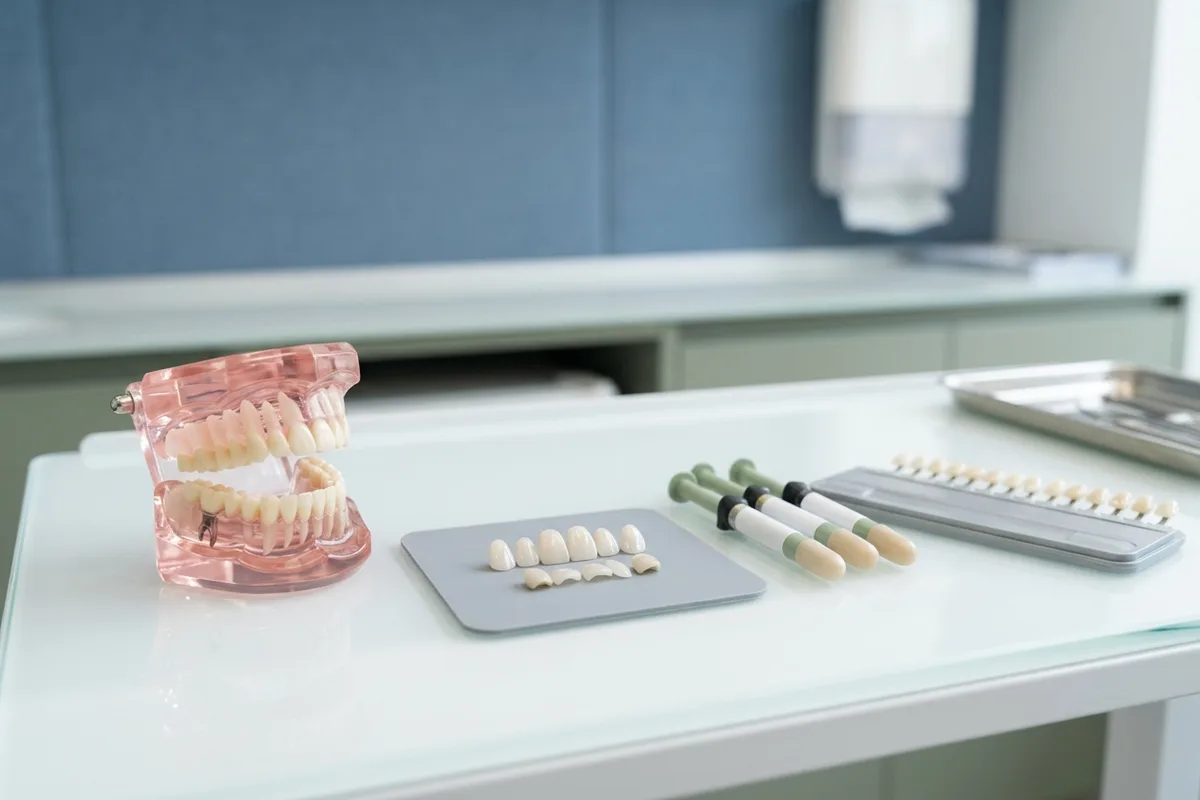
Choosing between dental bonding vs veneers depends on your smile goals, your budget, and how much natural tooth enamel you want to protect. Here is how both cosmetic dentistry choices compare.
The Short Verdict (Fast Answer)
Both treatments help fix chipped, stained, or uneven teeth to give you a clean, healthy smile. Direct dental bonding uses a tooth-colored resin shaped right onto your tooth in one visit. Porcelain veneers use custom shells made in a lab that cover the front of your teeth.[1][2][3][4][5]
- Choose dental bonding if you have small chips or minor gaps and want treatment completed in a single visit.
- Choose porcelain veneers if you want long-lasting shells that resist stains and correct wider tooth wear or deep stains across multiple teeth.
- Consider neither if you have active tooth decay, active gum disease, or clench and grind your teeth heavily.
Dental Bonding vs Veneers Side by Side
Looking at these treatments side by side helps you weigh the key differences before your dental visit. Your dentist can check your teeth and explain the exact steps for each procedure.
| Feature | Dental Bonding | Porcelain Veneers |
|---|---|---|
| Main material[3][5] | Tooth-colored composite resin | Custom dental porcelain |
| Number of visits[1][3][4] | Usually completed in one visit | Requires multiple dental visits |
| Enamel removal[1][3][4] | Needs little to no enamel trimming | Requires trimming away outer enamel |
| How long it lasts[1][2] | Usually lasts five to seven years | Typically lasts ten to fifteen years or more |
| Can it be undone?[1][3] | Can often be undone later | Cannot be undone because enamel is gone |
| How repairs are made[3][4] | Easily patched directly in the mouth | Damaged shells usually must be replaced |
| Stain resistance[1][3][4] | Can pick up stains over time | Resists stains very well |
Dental Bonding: Pros and Cons
Cosmetic dental bonding uses a soft composite resin matched to your natural tooth shade, similar to the material used for composite fillings. Your dentist shapes this resin over your tooth and hardens it with a blue curing light. This process creates a direct seal against your enamel to protect damaged areas.[2][3][4][5]
Benefits of Dental Bonding
Dental bonding offers a quick way to repair minor flaws without changing much of your natural tooth structure. It provides a simple path to fix chips or close tiny spaces.[1][2][3][4]
- Takes only one dental appointment to finish.
- Keeps most of your natural enamel intact.
- Costs less than laboratory-made porcelain covers.
- Allows simple repairs directly in the mouth if a chip occurs.
Drawbacks of Dental Bonding
While composite resin is helpful, the material is softer than ceramic porcelain. You may need more touch-ups over the years to keep your smile looking fresh.[1][3][4][5]
- Wears down faster than ceramic shells.
- Can pick up surface stains from dark food and drinks over time.
- May shrink slightly as the resin hardens under the curing light.
- Carries a shorter lifespan of five to seven years before needing replacement.
Porcelain Veneers: Pros and Cons
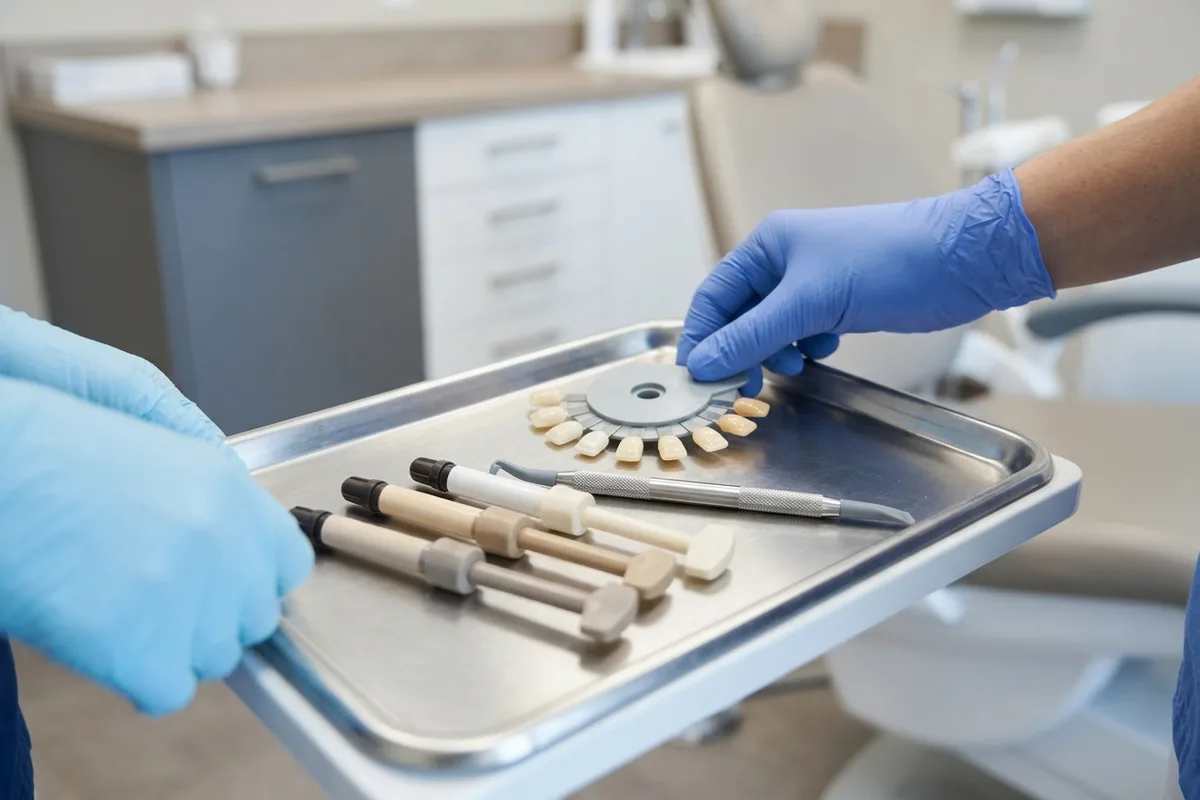
Porcelain veneers are thin shells crafted in a dental laboratory to fit over the front of your teeth. Your dentist removes a small layer of outer enamel so the shell sits flat. These shells mask deep stains, wear, and minor crookedness across your front teeth.[1][3]
Benefits of Porcelain Veneers
Porcelain gives teeth a bright, lifelike appearance that holds up well against daily biting. Many people choose them for a complete smile update.[1][2][3]
- Lasts ten to fifteen years or longer with good home oral care.
- Resists stains from dark beverages and everyday foods.
- Covers wide cosmetic issues like deep stains and worn enamel.
- Offers high strength once bonded firmly to your teeth.
Drawbacks of Porcelain Veneers
Getting veneers requires a bigger commitment of both time and tooth structure. Because enamel does not grow back, you must protect these teeth for good.[1][3]
- Cannot be undone because a thin layer of natural enamel is removed.
- Requires two or more appointments and wearing temporary shells while waiting on the lab.
- Costs more upfront than direct composite resin.
- Cannot be easily patched if the ceramic cracks, requiring a full replacement shell.
Which One Fits You
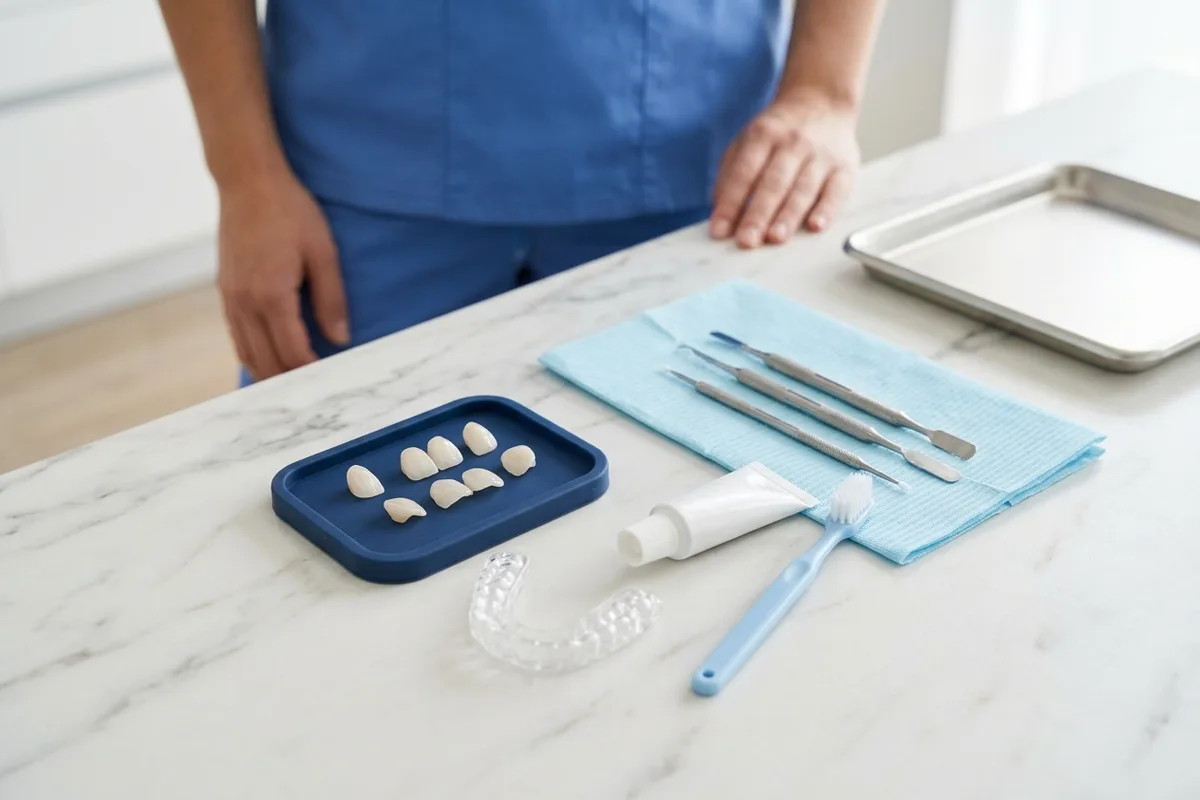
Your choice between dental bonding vs veneers comes down to how much work your teeth need and your personal smile goals. Both treatments offer great benefits when matched to the right tooth conditions.
When Dental Bonding Is the Better Fit
Dental bonding is ideal if you have a single chipped tooth or a small gap you want closed right away. Because it preserves your natural enamel, it works well if you want a conservative choice that does not change your tooth for good. It also fits people who want an effective tooth repair at a lower starting cost.[1][2][3][4]
When Porcelain Veneers Are the Better Fit
Porcelain veneers are better if you want to update multiple front teeth or fix deep stains that bleaching cannot lift. They suit patients who want a long-lasting, stain-fighting surface that lasts for a decade or more. You must have healthy gums, strong enamel, and be comfortable with a choice that cannot be undone.[1][3]
Deciding With Your Dentist
Before starting cosmetic dentistry, set up a full checkup with your dentist to inspect your gums and enamel. Any cavities or active gum infections must be treated before adding bonding or veneers. This step protects your natural teeth and prevents deeper damage underneath your new dental work.
At One Ounce Dental, you can discuss your smile goals and daily habits with Dr. Yiyang Zou to see what makes sense. Consider asking these questions during your visit:[1][3]
- Do my teeth show signs of nighttime grinding or clenching?
- How much natural enamel would need to be trimmed for veneers?
- Will my dental insurance help cover any part of this repair?
- What type of mouthguard should I wear to protect my teeth during sports?
Sources
- Should I Get Veneers? Consider These 5 Things First — urmc.rochester.edu
- Top 5 Myths About Cosmetic Dentistry Debunked for Better Understanding — you.stonybrook.edu
- Veneers — American Dental Association
- Esthetic Rehabilitation with Direct Composite Veneering: A Report of 2 Cases — pmc.ncbi.nlm.nih.gov
- Materials for Direct Restorations — American Dental Association
Common questions
Frequently asked questions
Questions about your own smile?
Ready to explore dental bonding vs veneers for your smile? Contact One Ounce Dental in Chino, California, at 909.283.3130 to schedule your consultation and find the right fit for your teeth.
More Articles
View all Dental care
Clear Aligners vs Braces: Which Is Better for You?
Clear aligners and fixed braces both straighten teeth and improve your bite. Your choice depends on your daily routine, how complex your tooth movements are, and how closely you can follow wear rules.October 28, 2026 · 6 min read Dental care
How to Get Rid of Tonsil Stones (Step-by-Step)
Wondering how to get rid of tonsil stones safely at home? Gentle salt water rinses, soft cotton swabs, and careful oral hygiene can clear trapped debris and ease throat irritation without harming delicate tissues.October 27, 2026 · 6 min read Dental care