

Clear Aligners vs Braces: Which Is Better for You?
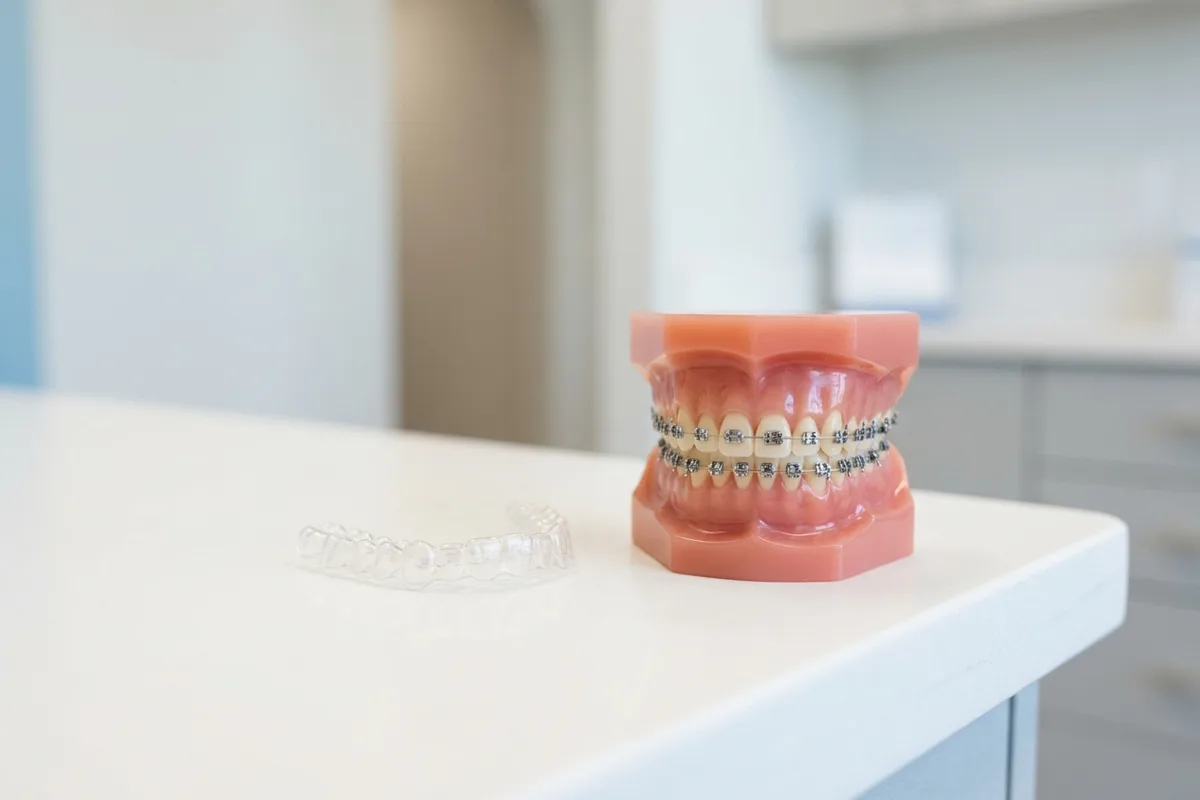
Clear aligners and fixed braces both straighten teeth and improve your bite. Your choice depends on your daily routine, how complex your tooth movements are, and how closely you can follow wear rules.
The Short Verdict (Fast Answer)
Both clear aligners and fixed braces move teeth safely to create a healthier smile. In many cases that do not need tooth removal, both systems achieve similar results and take about the same time. The best pick comes down to your personal habits and how much your teeth need to shift.[4]
- Choose clear aligners if you want trays that are hard to see and you can commit to wearing them.
- Choose braces if you have teeth that need to be removed to make space.
- Consider neither if you cannot keep up with daily oral cleaning, as both methods require good hygiene to prevent decay and gum infection.
Clear Aligners vs Braces Side by Side
Comparing each system side by side helps you see how they fit your daily habits, schedule, and smile goals. Reviewing these key differences can prepare you for a helpful discussion with your dental provider.
| Feature | Clear Aligners | Braces |
|---|---|---|
| Appliance type[2] | Clear plastic trays molded to your teeth | Brackets glued to teeth with guiding wires |
| Daily wear time[1][2][3] | Worn 20 to 22 hours per day | Fixed in place continuously |
| Dietary rules[1][3] | No food limits because trays come out | Brackets stay on and can break if disturbed |
| Office visits[3] | Scheduled visits every six to ten weeks | Scheduled adjustments every six to ten weeks |
| Bite complexity[1][4] | Effective for mild to moderate crowding or spacing | Offers more control for severe bad bites or tooth removals |
| At-home cleaning[1][2] | Take trays out to brush and floss normally | Brush and floss around wires and brackets |
| After-care retention[3][5] | Requires wearing retainers as instructed | Requires wearing retainers as instructed |
Clear Aligners: Pros and Cons
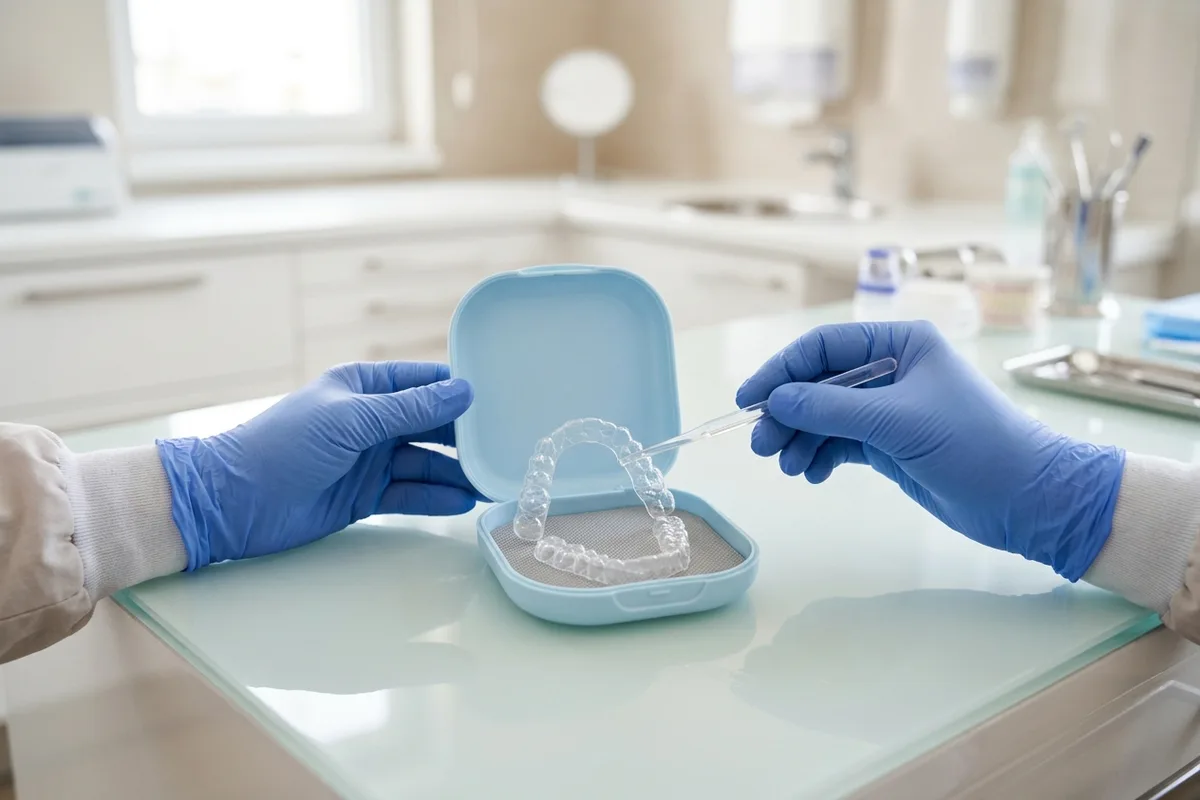
Clear aligners are custom plastic trays designed to guide teeth into better spots over time. Your provider uses digital scans, photos, and X-rays to plan out each movement step before you begin. You wear each clear set for one to two weeks before switching to the next tray in your series.[1][2]
Pros of Clear Aligners
Clear aligners give patients a subtle way to straighten teeth without metal wires. Because you can slip them out on your own, daily routines feel simple and normal.[1][4]
- Plastic trays are transparent and hard for other people to see.
- You can remove the trays to enjoy your regular meals without food limits.
- Brushing and flossing remain normal because no hardware blocks your teeth.
- Treatment may finish faster in select cases that do not need tooth removal.
Cons of Clear Aligners
While clear aligners are convenient, they demand strong personal habits each day. Leaving them out too long can easily slow your progress and harm your results.[1]
- You must keep them in your mouth for 20 to 22 hours every day.
- Aligners can trap food and drinks against enamel, raising the risk of cavities.
- You must only drink plain water while wearing your plastic trays.
- They may offer less control for severe bad bites or major tooth turns.
Braces: Pros and Cons
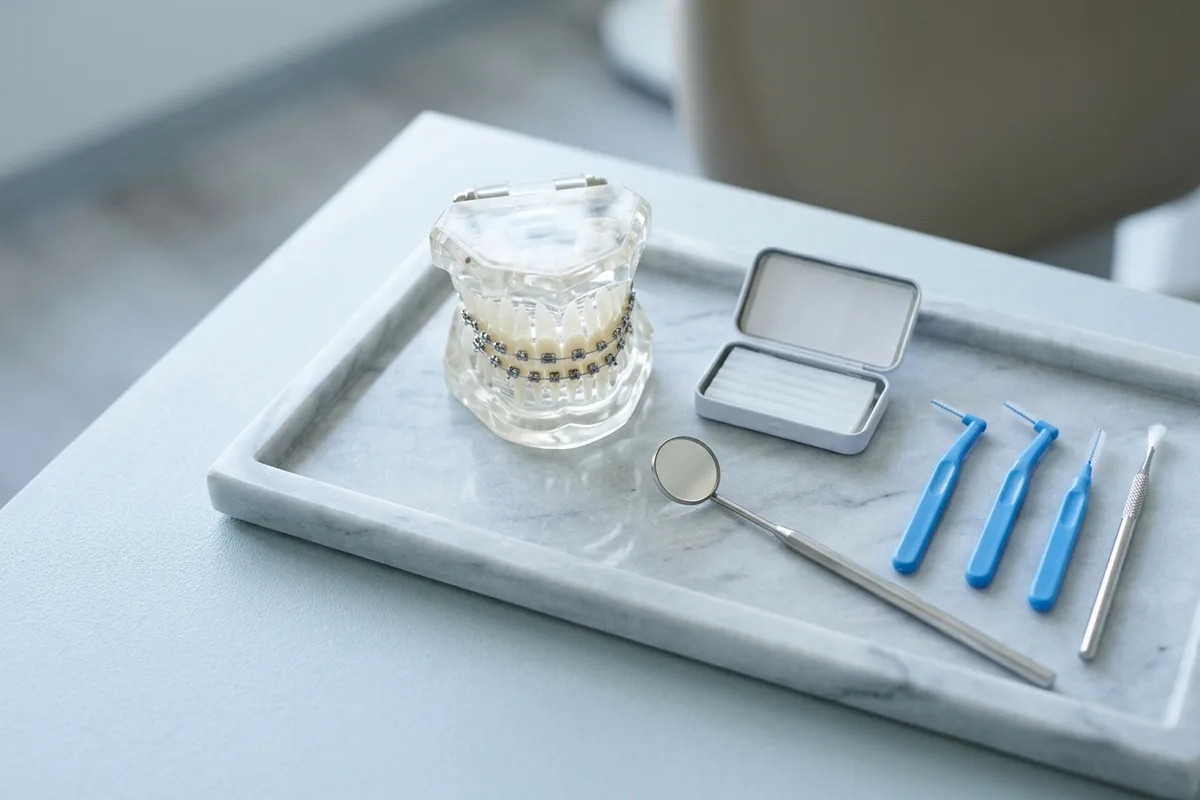
Standard braces use brackets attached directly to teeth along with thin wires to steer tooth movement. They start moving teeth on the very day your provider places them in your mouth. Orthodontic rubber bands (elastics) can also be added to deliver extra force where wires alone cannot reach.[2][3]
Pros of Braces
Braces give your provider direct control over complex tooth shifts during every office visit. Because they remain attached to your teeth, you never have to remember when to put them back in.[3][4]
- Braces provide superior control when teeth must be extracted to fix crowding.
- They handle severe bite problems.
- Treatment stays active constantly without relying on you to remember wear times.
- Your provider can adjust wires directly at regular checkups to guide progress.
Cons of Braces
Fixed braces are more visible than clear trays and can cause temporary mouth irritation. Taking proper care of your mouth also takes more time and attention.[1][2][3]
- Brackets and wires are more noticeable across your smile.
- Hardware can rub the inside of your mouth and cause mild soreness.
- Broken brackets or loose wires require clinic visits to fix.
- Plaque can hide around hardware, increasing the risk of cavities if not cleaned.
Which One Fits You
Mild to Moderate Spacing or Crowding
When your teeth only have mild crowding or spacing, clear aligners are often a great match. These mild issues can frequently be resolved in eight to twelve months. Because clear trays work well for cases that do not need tooth extraction, you can enjoy a subtle look while reaching your smile goals.[1][3][4]
Complex Bites or Extractions
Severe bad bites (dental malocclusions) like deep overbites, crossbites, or cases needing tooth removal usually do better with braces. Braces give the provider the mechanical control needed to close wide gaps. In severe cases involving jaw alignment, corrective jaw surgery (orthognathic surgery) may also be paired with your appliance.[1][2][4]
Daily Habits and Wear Discipline
Your daily routine plays a huge role in choosing between clear aligners vs braces. If you might misplace trays or forget to wear them for 20 to 22 hours, fixed braces protect your timeline. If you want normal brushing and eating and can stick strictly to wear rules, clear aligners may fit you best.[1][3]
Deciding With Your Dentist
Both clear aligners and fixed braces deliver healthy smiles, easier chewing, and clearer speech. After active treatment ends, you will wear retainers to keep teeth from drifting back toward old spots. Taking time to review your lifestyle and bite needs with your dental team helps you choose with confidence.
If you live near Chino, CA, you can discuss clear aligners and braces in person with Dr. Yiyang Zou at One Ounce Dental. You can ask whether your bite needs tooth removal, how long care might take, and what retainer routine fits your smile best. Your provider can also explain what drives total costs before you begin treatment.[2][3][5]
Sources
- Clear Aligner Therapy: The Discreet Way to Straighten Teeth — American Association of Orthodontists
- Learn More About Orthodontic Treatment Options — American Association of Orthodontists
- What to Expect During Orthodontic Treatment — American Association of Orthodontists
- Quality and stability of orthodontic treatment outcomes with clear aligners versus fixed appliances: a systematic review and meta-analysis — pubmed.ncbi.nlm.nih.gov
- Orthodontics — American Dental Association
Common questions
Frequently asked questions
Questions about your own smile?
To explore clear aligners and teeth straightening options for your smile, call One Ounce Dental at 909.283.3130 to book your visit with Dr. Yiyang Zou in Chino, CA.
More Articles
View all Dental care
How to Get Rid of Tonsil Stones (Step-by-Step)
Wondering how to get rid of tonsil stones safely at home? Gentle salt water rinses, soft cotton swabs, and careful oral hygiene can clear trapped debris and ease throat irritation without harming delicate tissues.October 27, 2026 · 6 min read Dental care
Is Hydrogen Peroxide Mouthwash Safe? Benefits, Risks, and Safe Use
Hydrogen peroxide mouthwash is generally safe for short-term oral wound cleansing or mild stain reduction when properly diluted, but it should not be swallowed or used long term without professional guidance.October 26, 2026 · 7 min read Dental care